Measuring Principles and Methods of Laser Rangefinders
What is the principle of using infrared or laser ranging?
The principle of distance measurement can be basically summarized as measuring the time required for light to travel back and forth to the target, and then calculating the distance D through the speed of light c=299792458m/s and the atmospheric refractive index n. Due to the difficulty of directly measuring time, it is usually necessary to determine the phase of continuous waves, which is called a phase measuring rangefinder. Of course, there are also pulse rangefinders, with WILD's DI-3000 being a typical example
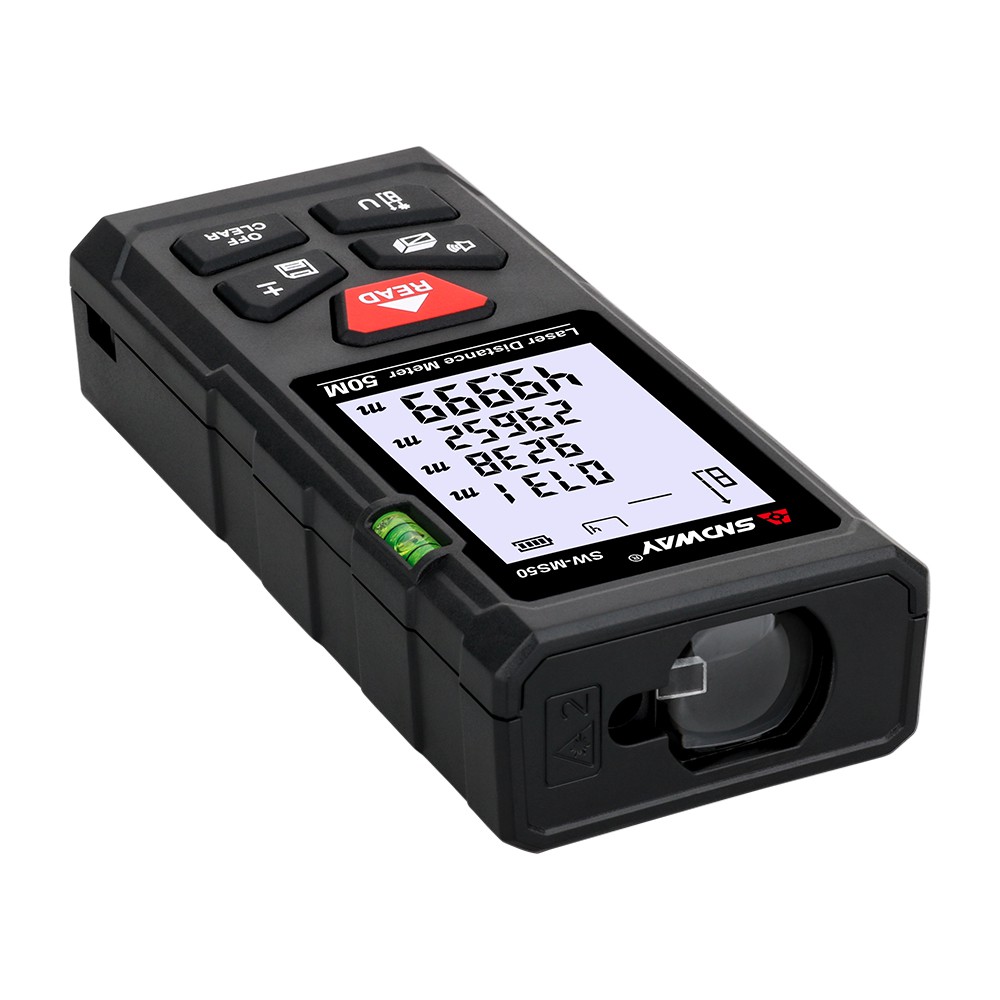
It should be noted that phase measurement does not measure the phase of infrared or laser, but rather the phase of the signal modulated on the infrared or laser. There is a handheld laser rangefinder in the construction industry used for measuring houses, and its working principle is the same as this.
Does the plane of the object being measured have to be perpendicular to the light?
Usually, precision distance measurement requires the use of a total reflection prism, while the distance measuring instrument used for house measurement directly measures the reflection of smooth walls, mainly because the distance is relatively close and the signal strength reflected back by the light is strong enough. It can be inferred that it must be perpendicular, otherwise the return signal will be too weak to obtain the * * distance.
3. Can the plane of the object being measured be diffuse reflection?
It is usually possible, but in practical engineering, thin plastic sheets are used as reflective surfaces to solve the problem of severe diffuse reflection.
4. Ultrasonic ranging accuracy is relatively low and is rarely used now.