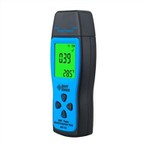
Measuring Techniques for an Analog Multimeter
1. Test speakers, headphones, and dynamic microphones: Use R × 1 Ω mode, connect one probe to one end, and touch the other probe to the other end. Under normal circumstances, a crisp "click" sound will be emitted. If it doesn't make a sound, it means the coil is broken. If the sound is small and sharp, it means there is a problem with wiping the coil and it cannot be used. There are generally three methods, which we will introduce in detail below.
Method 1: For meters without hFE measuring sockets or for tubes that are too large to be inserted into sockets, this method can be used: for NPN tubes, first measure the b-pole (whether the tube is NPN or PNP and its b-pin are easy to measure, right? )Place the watch in the R × 1k Ω range, connect the red probe to the assumed e pole (be careful not to touch the tip or pin of the red probe with your hand), and connect the black probe to the assumed c pole. At the same time, pinch the tip and pin of the watch with your fingers, pick up the tube, and use your tongue to lick the b pole. Check that the pointer on the watch head should have a certain deviation. If you connect the probes correctly, the deviation of the pointer will be larger. If you connect them incorrectly, the deviation of the pointer will be smaller. The difference is very obvious. Of course, when measuring, the probes need to be exchanged twice to compare the readings before making a final judgment. This method is applicable to all shapes of transistors and is convenient and practical. Based on the deflection amplitude of the pointer, the amplification ability of the tube can also be estimated, of course, this is based on experience.
Method 2: For a pointer meter with a measuring transistor hFE socket, first measure the b-pole, then insert the transistor into the socket at will (of course, the b-pole can be inserted accurately), measure the hFE value, and then turn the transistor upside down and measure again. The larger hFE value is measured once, and the insertion position of each pin is correct.
The third method: First, determine the NPN or PNP type of the transistor and its b-pole, then place the meter in the R × 10k Ω range. For NPN transistors, when the black probe is connected to the e-pole and the red probe is connected to the c-pole, there may be a certain deviation in the needle. For PNP transistors, when the black probe is connected to the c-pole and the red probe is connected to the e-pole, there may be a certain deviation in the needle, and vice versa, there will be no deviation. This can also determine the c and e poles of the transistor.
The third method cannot be used for high pressure resistant pipes. Specially noted here.