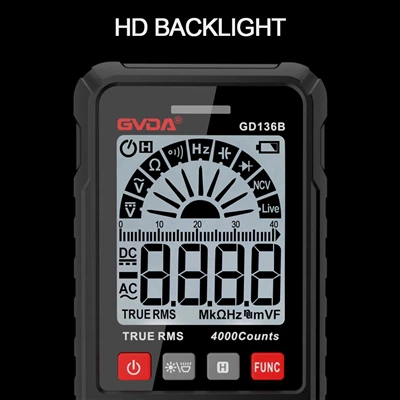
Methods for Testing Electrolytic Capacitors with a Multimeter
Step 1: First, adjust the multimeter to the appropriate ohm range. For capacitors with a capacity below 1UF, use the "20k" range for detection. For capacitors with a capacity between 1UF-100UF, use the "2K" range for detection. For capacitors with a capacity greater than 100UF, use the "200" range for detection. Step 2: Then, use the two probes of the multimeter to connect them to the two ends of the capacitor (with the red probe connected to the positive pole of the capacitor and the black probe connected to the negative pole of the capacitor). If the displayed value gradually increases from 000, and finally displays the overflow symbol 1, it indicates that the capacitor is normal. If the multimeter always displays 000, it means that there is an internal short circuit in the capacitor. If the terminal displays 1, it indicates that the capacitor is short circuited. If the capacitance is between 0.47UF and 2200uF, it may be a short circuit between the internal poles of the capacitor. Capacitors with a common capacity between 0.47UF and 2200uF can be directly tested for their capacity and quality using an MF47 meter. Specific method: Fully discharge the capacitor, connect the black probe to the positive pole of the capacitor, and connect the red probe to the negative pole of the capacitor. Determine whether the capacitor is damaged based on the maximum number of squares it swings (50 squares when full). The data is shown in the table below: capacitor gear grid number 0.47 uFx10K7 1uFx10K12 2.2uFx10K20 4.7uFx1K7 10uFx1K12 22uFx1K20 47uFx1007 100uFx10012 220uFx10020 470uFx107 1000uFx1012 2200uFx1020 Attention: Connect the black pen to the positive pole of the capacitor and the red pen to the negative pole. If connected incorrectly, it may cause inaccurate data. Each time the capacitance is measured, it needs to be discharged again. Conclusion: If the needle does not move or moves slightly, it indicates that the capacitor is faulty. If the needle returns too slowly, the capacitor may leak or the multimeter gear may be used incorrectly. If the needle gradually rises after returning, the capacitor may have slight leakage or poor quality.