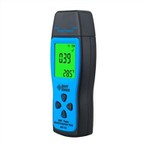
Moisture measuring instrument: a simple method to avoid callback
Check the moisture conditions of hardwood flooring installation
When installing hardwood flooring, using a wood hygrometer such as a TechScan needle free measuring instrument can check the moisture content (% MC) of the wood before installation. Needle less instruments are a particularly good tool for inspecting hardwood flooring% MC, as they can be measured in these materials without leaving unsightly pinholes in them.
Using a needle free instrument, you simply press the scanning board onto the sample material, read and repeat the process until you obtain sufficient readings from different samples of hardwood flooring to ensure the correct installation range of the% MC.
Check the subfloor
In addition to simply checking the moisture content of the hardwood floor you are installing, you also need to check the moisture content of the bottom layer of the hardwood floor installed on the bottom layer.
Why? Because even if your top layer's% MC is good, building on a damp sub floor can still cause problems because excess moisture from one material can penetrate into another.
For the subfloor, the type of instrument you use will vary depending on the type of subfloor you have. For wooden sub floors, both needle free and needle free hygrometers are useful. Needle less instruments are perfect for quickly assessing large areas of underfloor, while needle based instruments can help you accurately locate the depth of moisture pockets. In fact, many contractors use two types of instruments when inspecting wood.
Adapting Sure Wood to the Environment
When preparing to install wooden flooring, it is important to ensure that the wooden materials you are using are properly domesticated. Different regions in the United States have different levels of environmental humidity, which in turn means that wooden materials will reach their equilibrium moisture content (EMC) at different% MCs by region.
Even in the same area, different buildings may have different humidity conditions due to the owners of the buildings operating their HVAC systems in different environments. Therefore, it is important to adapt the wooden flooring inside the building to the environment within a few days before installation.
To check if your wooden floor meets the EMC requirements of its building conditions, please use a moisture meter to check the% MC of the wood every day for a few days. When the moisture reading no longer fluctuates from one day to the next, your wood has reached the EMC environment and is ready for installation.
While adapting to wood, it is important to ensure that the HVAC system is in operation and will be used for daily operations of the building once completed. In this way, you can ensure that the wood is not exposed to significantly different climates after installation, as it absorbs or exudes moisture to achieve balance with the surrounding environment, which may lead to expansion or contraction.
Before installing hardwood flooring, you can help ensure that you don't have to go through time-consuming and expensive callbacks by using a hygrometer to check if the wood and subfloor materials are properly adapted.