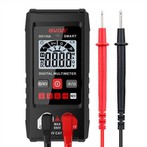
Noise Meter Condenser Microphone, Sensor
Classification of microphones
According to the principle of sound-electric conversion, it is divided into: electric type (moving coil type, aluminum belt type), capacitive type (DC polarization type), piezoelectric type (crystal type, ceramic type), and electromagnetic type, carbon particle type, semiconductor type wait.
There are two types of condenser microphones, one is microphone type, such as the microphone in KTV. This kind of condenser microphone uses a battery-powered handheld condenser microphone, usually AA batteries; another kind of condenser microphone is a recording microphone, such as a recording microphone in a radio studio and a recording studio. This condenser microphone needs 48 volts of phantom power for power supply.
Compared with other microphones, the characteristics of condenser microphones are:
1. Good sound clarity
2. It has ultra-high sensitivity. The reason is that because there is no voice coil load on the vibrating membrane, it can adopt an extremely thin and light design, so not only the frequency response is extremely superior, but also it has excellent sensitivity, which can sense extremely weak sound waves and output the clearest, most delicate and accurate original sound !
3. The output sound quality is full and thick but not muddy.
4. Fast transient response characteristics. The ability to respond quickly and slowly to sound waves is more responsive than other microphones.
5. It has the characteristics of ultra-low touch noise. The reason is that the diaphragm of the condenser microphone is relatively light, which inherently has the excellent characteristic of "ultra-low touch noise".
6. It has the characteristics of drop resistance and impact resistance. Condenser microphones are small in size and light in weight due to the ultra-thin diaphragm.
Condenser microphone structure
1. PCB and FET components: FETs, capacitors, resistors and other devices are mounted on the surface of the PCB. The function of the FET is mainly the conversion of impedance matching. The resistance and capacitance provide suitable DC bias, AC signal output, and filter anti-interference shielding It also plays the role of fixing and preventing foreign objects.
2.2. Grid conductive ring: connect the electret plate and the gate (G pole) of the FET, and transmit the weak electrical signal converted by the tiny vibration detected by the diaphragm to the G pole, and play a role of mechanical support.
3. Grid insulation ring: fix the electret plate and the grid conductive ring, so as to prevent the electret plate and the grid conductive ring from short-circuiting the shell (the source of the FET is transported to the G pole, and plays a role of mechanical support.
4. Electret plate: A layer of Teflon plastic film is attached to the surface. The film is filled with static charges and forms another electrode of the capacitor opposite to the diaphragm. The non-film surface is connected to the G pole of the FET through the grid conductive ring. superior.
5. Insulation sheet: Support the distance between the two electret plates of the capacitor, leaving a gap to provide a space for the diaphragm to vibrate, thereby changing the capacitance.
6. Diaphragm: It is a tight PET/PPS plastic film glued to a metal ring. The surface of the film in contact with the metal ring is coated with a very thin metal layer, and the composition of the electret plate is variable. Capacitor - an electret plate, and it is an electret plate that can vibrate.
7. External situation: the supporting part of the whole microphone, its outer part is packaged in the shell, which is the grounding point of the microphone, and plays the role of electromagnetic and optical shielding, dustproof and foreign matter prevention.