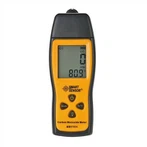
Non-destructive testing method and principle of coating thickness gauge
Using a thickness gauge is the same as using other instruments. It is necessary to master the performance of the instrument and understand the test conditions. The coating thickness gauge using the magnetic principle and the eddy current principle measure the coating thickness based on the electrical and magnetic properties of the measured substrate and the distance from the probe. Therefore, the electromagnetic physical characteristics and physical dimensions of the measured substrate will affect Magnetic flux and eddy current magnitude. That is, it affects the reliability of the measured value.
1. Magnetic attraction principle thickness gauge
The thickness of the cladding can be measured by using a certain proportional relationship between the suction force between the * magnet probe and the magnetic steel and the distance between the two. This distance is the thickness of the cladding, so as long as the cladding and the base material are conductive The difference in magnetic rate is large enough that a measurement can be made. In view of the fact that most industrial products are stamped and formed by structural steel and hot-rolled cold-rolled steel plates, magnetic thickness gauges are the most widely used. The basic structure of the measuring instrument is magnetic steel, tension spring, scale and self-stop mechanism. When the magnetic steel is attracted to the object under test, a spring will gradually elongate thereafter, and the tension will gradually increase. When the tension steel is greater than the suction force and the magnetic steel is separated, record the magnitude of the pull force to obtain the coating thickness. Generally speaking, different models have different measuring ranges and suitable occasions. In an angle of about 350o, the scale can be used to indicate the coating thickness of 0~100μm; 0~1000μm; 0~5mm, etc., and the accuracy can reach more than 5%, which can meet the general requirements of industrial applications. This instrument is characterized by simple operation, strong durability, no need for power supply and calibration before measurement, and low price, which is very suitable for on-site quality control in workshops.
2. Magnetic induction principle thickness gauge
The principle of magnetic induction is to use the magnetic flux flowing into the iron substrate through the non-ferromagnetic coating to measure the thickness of the coating. The thicker the coating, the smaller the magnetic flux. Because it is an electronic instrument, it is easy to calibrate, and can realize multiple functions, expand the measuring range, and improve the accuracy. Since the test conditions can be reduced a lot, it has a wider application field than the magnetic suction type.
When the measuring head with the coil wound on the soft iron core is placed on the object to be tested, the instrument will automatically output the test current, the magnitude of the magnetic flux will affect the magnitude of the induced electromotive force, and the instrument will amplify the signal to indicate the coating thickness. The early products were indicated by the meter head, and the accuracy and repeatability were not good. Later, the digital display type was developed, and the circuit design was becoming more and more perfect. In recent years, with the introduction of microprocessor technology, electronic switches, frequency stabilization and other technologies, a variety of obtained products have come out one after another, the accuracy has been greatly improved, reaching 1%, and the resolution has reached 0.1μm. The measuring head of the magnetic induction thickness gauge has many Mild steel is used as the magnetic core, and the frequency of the coil current is not high to reduce the influence of the eddy current effect. The probe has a temperature compensation function. Since the instrument is intelligent, it can identify different probes, cooperate with different software and automatically change the current and frequency of the probe. One instrument can be used with multiple probes, or the same instrument can be used. It can be said that instruments suitable for industrial production and scientific research have reached a very practical stage.
Thickness gauges developed using electromagnetic principles are in principle applicable to the measurement of all non-magnetically permeable coatings, and generally require a basic magnetic permeability of 500 or more. If the cladding material is also magnetic, it is required to have a sufficiently large gap with the magnetic permeability of the base material (such as nickel plating on steel). The magnetic principle thickness gauge can be used to measure paint coatings on steel surfaces, porcelain and enamel protective layers, plastic and rubber coatings, various non-ferrous metal plating layers including nickel and chromium, and various anti-corrosion coatings in the chemical and petroleum industry. . For photosensitive film, capacitor paper, plastic, polyester and other film production industries, the use of measuring platforms or rollers (made of steel) can also be used to measure any point on a large area.
The eddy current thickness measurement method is mainly used in the measurement of various non-metallic coatings on metal substrates. Using high-frequency alternating current to generate an electromagnetic field in the coil of the probe, when the probe is close to a conductive metal body, an eddy current is formed in the metal material, and increases as the distance from the metal body decreases, and the eddy current will affect the probe coil The magnetic flux, so the amount of feedback is a measure of the distance between the probe and the base metal, because the probe is used to measure the thickness of the coating on the non-ferromagnetic metal substrate, so we usually call the probe a non-magnetic Probe. Non-magnetic probes generally use high-frequency and high-permeability materials as coil cores, often made of platinum-nickel alloys and other new materials. Compared with the magnetic measurement principle, their electrical principle is basically the same, the main difference is that the probe is different, the frequency of the test current is different, and the signal size and scale relationship are different. In the advanced thickness gauge, by continuously improving the structure of the measuring head and cooperating with microcomputer technology, different control programs are called by automatically identifying different measuring heads, outputting different test currents and changing the scale conversion software, and finally make two different The different types of measuring heads are connected to the same thickness gauge, which reduces the burden on users. Based on the same idea, the thickness gauge that can be connected to 10 kinds of side heads greatly expands the thickness measurement range (up to 100,000 times or more), It can measure the non-magnetic coating on the surface of the magnetic material, the non-conductive coating on the conductive material and the conductive layer on the non-conductive material, which basically meets the needs of most industries in industrial production.
The thickness gauge using the principle of eddy current, in principle, can measure the non-conductive coating on all electrical conductors, such as the paint, plastic coating and anode on the surface of aerospace vehicles, vehicles, household appliances, aluminum alloy doors and windows and other aluminum products. Oxide film. Some special purposes such as diamond coating on certain metals and other sputtered non-conductive layers. The cladding material can also have a certain conductivity, which can also be measured through calibration, but the ratio of the conductivity of the two is required to be at least 3 to 5 times different (such as chrome plating on copper).
The principle of calibration is that the calibration sample without coating and the base material of the measured object should have the same composition, the same thickness (mainly when the thickness is less than the minimum value specified by the instrument about 0.5mm), and the same radius of curvature, If the measured area is smaller than the requirements of the technical parameters of the instrument (less than about 20mm in diameter), the same measured area should also be available. If the coating contains conductive components, the coating of the calibration sample should also have the same conductivity as the coating of the measured object. After the coating of the calibration sample has been tested by other methods (including destructive testing methods), the thickness is calibrated or the calibrated calibration sheet is used as the coating, and the thickness gauge can be calibrated on it according to the method in the manual. After calibration, rapid non-destructive testing can be performed on the product under test. Calibration sheets are generally made of triacetate film or hard paper impregnated with phenolic resin.
Microcomputer thickness measurement generally has multiple calibration values stored. It can be calibrated and stored separately with the different positions of the tested products, material changes, and replacement of probes. In actual use, each calibration value is called directly, so there is no need to re-adjust. This is the so-called "quick change benchmark". The detection efficiency is greatly improved.