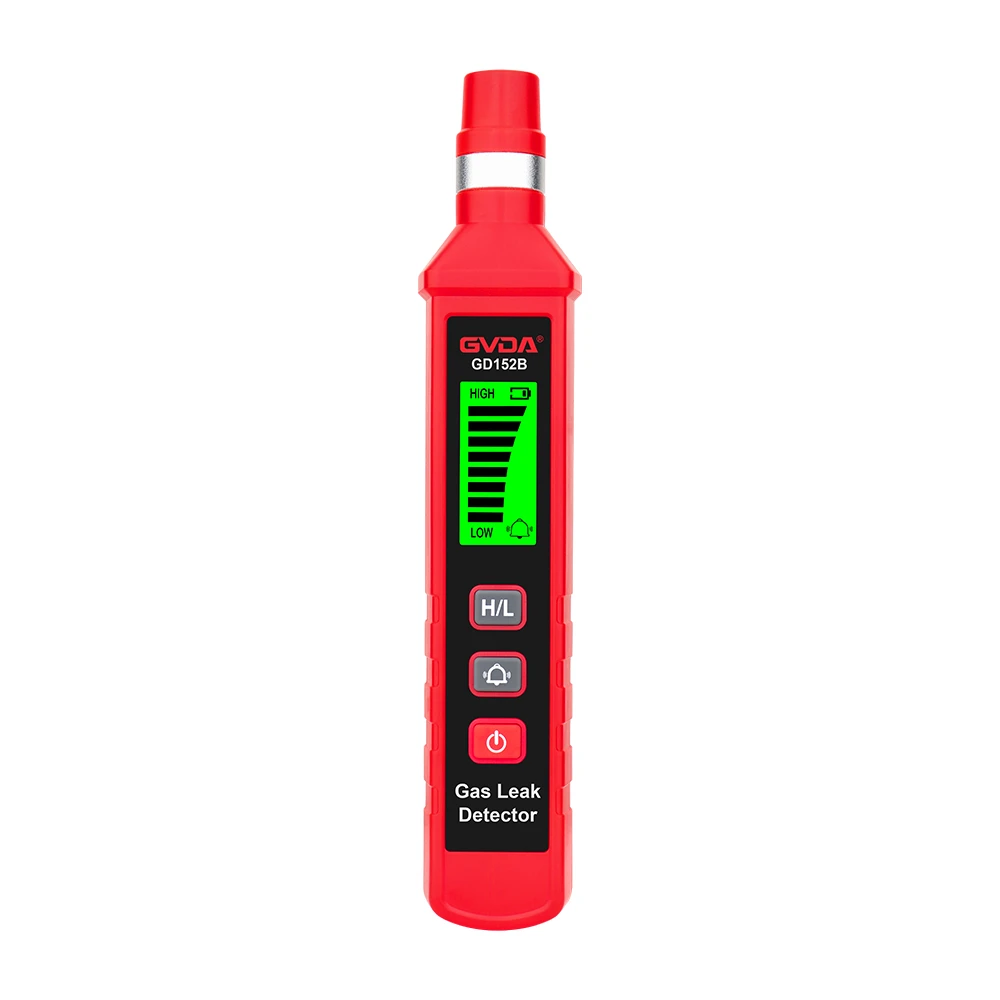
Operating Instructions for Portable Compound Gas Detectors
Portable multi gas detectors are widely used in the petrochemical industry where flammable gases exist, such as oil, gas, chemical, and oil depots. They are used to detect leaks in indoor and outdoor hazardous areas and are important instruments for ensuring production and personal safety. When using a portable multi gas detector correctly, the following points should be considered:
(1) Identify the possible leakage points of the device to be monitored, analyze their leakage pressure, direction, and other factors, and draw a distribution map of probe positions. According to the severity of the leakage, it can be divided into three levels: level I, level II, and level III.
(2) Based on specific factors such as airflow direction and wind direction in the location, determine the direction of combustible gas leakage when a large amount of leakage occurs.
(3) Based on the density of the leaked gas (greater or less than air), combined with the trend of air flow, a three-dimensional flow trend chart of the leak is synthesized, and an initial setting plan is made at the downstream position of its flow.
(4) Study whether the leakage state of the leakage point is micro leakage or jet like. If it is a minor leak, the location of the point should be closer to the leak point. If it is a jet leak, it should be kept slightly away from the leak point. Based on these situations, formulate the final point setting plan. In this way, the quantity and variety that need to be purchased can be estimated.
(5) For places with significant combustible gas leaks, a detection point should be set up every 10-20m according to relevant regulations. For unmanned small and discontinuous pump rooms, attention should be paid to the possibility of combustible gas leakage, and a detector should generally be installed at the lower air outlet.
(6) For locations with hydrogen gas leaks, detectors should be installed on a flat surface above the leak point.
(7) For media with a gas density greater than air, the detector should be installed on a plane below the leakage point, and attention should be paid to the characteristics of the surrounding environment. Special attention should be paid to the setting of safety monitoring points in places where flammable gases are prone to accumulate.
(8) For open environments where combustible gases diffuse and escape, if there is a lack of good ventilation conditions, it is also easy for the combustible gas content in a certain part of the air to approach or reach the lower explosive limit concentration. These are important safety monitoring points that cannot be ignored.