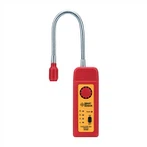
Precautions and maintenance of combustible gas detectors
Types of combustible gas detectors
1. Portable combustible gas detector
This type of combustible gas detector generally uses natural diffusion for gas concentration detection, and the catalytic combustion sensor contained in the detector also has high sensitivity. In addition, high-quality and low-priced combustible gas detectors also use embedded microcontroller technology, which gives the detector the advantages of simple operation and complete functions, greatly improving the efficiency and degree of gas detection work.
2. Pump suction combustible gas detector
This type of combustible gas detection alarm mainly uses a built-in suction pump, which has the characteristic of quickly detecting the concentration of combustible gases in the working environment. Moreover, the pump suction combustible gas detector not only uses catalytic combustion sensors, but also has a very clear large LCD display screen and sound and light alarm prompts, which can ensure that technicians can successfully detect gases in unfavorable working environments and ensure personal safety.
Precautions for combustible gas detector:
1. Wiring should be done in the event of a power outage, and after confirming the correct wiring, power should be turned on; Remote control should be used to debug the probe once it is confirmed that there are no combustible gas leaks on site.
2. The installation location should be within a radius of 1 meter around valves, pipeline interfaces, air outlets, or areas prone to leakage, as close as possible without affecting the operation of other equipment.
3. When used for large-scale gas detection, a probe of 20-50 square meters can be arranged to achieve safety monitoring.
4. Installation height: When detecting gases lighter than air such as hydrogen, natural gas, and city gas, they should be installed about 1 meter above the roof; When detecting gases heavier than air such as liquefied petroleum gas, they should be installed about 1.5-2 meters below the ground.
5. The installation method can be roof mounted, wall mounted, or connected to pipelines, etc. It should be ensured that the installation is firm and reliable. We have equipped an infrared remote control for easy debugging and operation.
6. On site wiring should be carried out through pipes that meet fire safety requirements. The pipes should be connected to probes to meet fire safety requirements.
7. The sensor should be fixed facing downwards during installation.
8. Shielded cables should be used for wiring, with a single wire diameter greater than 1 square millimeter. The shielding layer must be grounded during wiring.
Maintenance of combustible gas detector
1. Check the gas flow rate, usually 30/h, as excessive or insufficient flow rate can have a significant impact on the analyzer results
2. Replace filter paper: Stop the air pump and drain the filter tank
3. Check for any air leaks in the pneumatic system. Whether the diaphragm of the sobbing pump is damaged, whether the sealing ring of the sampling probe is broken, whether the four-way valve and condensate are damaged, etc
4. Cleaning of sampling probe, unblocking of sampling hole pipeline
5. Check if the condenser is working properly, usually adjust the temperature within the range of 3 degrees Celsius
6. Check the measuring room for dirt and clean it promptly.