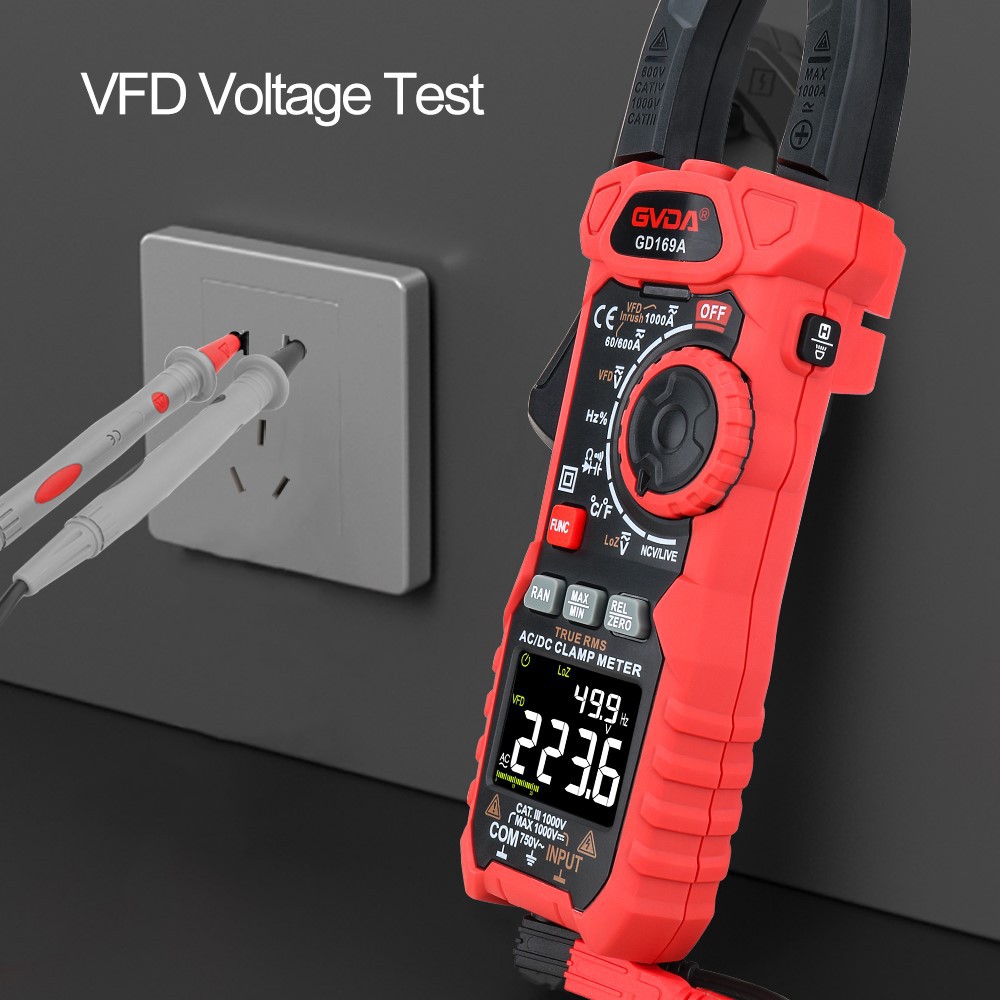
Precautions for Measuring DC Current with a Clamp Meter
1. Precautions before measurement
Firstly, the clamp ammeter should be selected correctly based on the type and voltage level of the current being measured. The voltage of the tested circuit should be lower than the rated voltage of the clamp ammeter. When measuring the current of high-voltage lines, a high-voltage clamp ammeter that matches its voltage level should be selected. Low voltage clamp ammeters can only measure current in low-voltage systems and cannot measure current in high-voltage systems.
Secondly, the appearance of the clamp current meter should be checked correctly before use. It is necessary to check whether the insulation performance of the meter is good, the shell should be undamaged, and the handle should be clean and dry. If the pointer is not at zero position, mechanical zeroing should be performed. The jaws of the clamp ammeter should be tightly connected. If the pointer shakes, the jaws can be opened and closed again. If the shaking still exists, it should be carefully inspected, and attention should be paid to removing debris and dirt from the jaws before measuring.
Due to the need to contact the tested circuit, clamp ammeters cannot measure the current of bare conductors. When measuring with a high-voltage clamp meter, it should be operated by two people. When measuring, insulated gloves should be worn, standing on an insulated pad, and other equipment should not be touched to prevent short circuits or grounding.
2. Precautions during measurement
Firstly, when using, tighten the wrench to open the jaws, place the measured wire in the center of the jaws, then release the wrench and close the jaws tightly. If there is any noise on the joint surface of the jaws, they should be opened and closed again. If there is still noise, the joint surface should be treated to ensure accurate reading. Additionally, it is not allowed to clamp two wires at the same time. After reading, open the jaws and exit the tested wire. Set the gear to the highest current or OFF position.
Secondly, the appropriate range of the clamp type ammeter should be selected based on the magnitude of the measured current. The selected range should be slightly larger than the measured current value. If it cannot be estimated, to prevent damage to the clamp ammeter, the measurement should start from the maximum range and gradually change gears until the range is appropriate. It is strictly prohibited to switch the gear of the clamp ammeter during the measurement process. When shifting gears, the measured wire should be removed from the clamp first and then the gear should be changed.
When measuring currents below 5 amperes, in order to make the reading more accurate, if conditions permit, the measured current carrying wire can be wound several times and placed in a clamp for measurement. At this time, the actual current value of the tested wire should be equal to the reading value of the instrument divided by the number of turns of the wire placed in the clamp.
When measuring, attention should be paid to maintaining a safe distance between all parts of the body and the charged body. The safe distance for low-voltage systems is 0.1-0.3 meters. When measuring the current of each phase of high-voltage cables, the distance between cable heads should be at least 300 millimeters, and the insulation should be good. The measurement can only be carried out when it is deemed convenient. When observing the timing of the watch, special attention should be paid to maintaining a safe distance between the head and the charged part. The distance between any part of the human body and the charged body should not be less than the entire length of the clamp shaped watch.