Principle and Accuracy of Noise Determination by Sound Level Meters
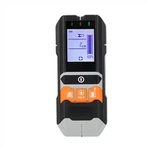
Sound level meter is the most basic instrument in noise measurement, also known as noise meter, decibel meter, noise measuring instrument and so on.
Sound level meter generally consists of condenser microphone, preamplifier, attenuator, amplifier, frequency weighting network and RMS indication meter head.
The working principle of sound level meter is: the microphone converts the sound into electric signal, and then the preamplifier transforms the impedance to match the microphone with the attenuator. Amplifier will be added to the output signal weighting network, the signal frequency weighting (or external filter), and then by the attenuator and amplifier will be amplified to a certain amplitude of the signal, sent to the RMS oscilloscope (or outside the level recorder), in the indication of the head of the meter to give the value of the noise sound level.
The frequency weighting network in the sound level meter has A, B, C three standard weighting networks.
A network is a simulation of the human ear on the equal-loud curve in the 40-square pure tone response, the shape of its curve and 340-square equal-loud curve in contrast, so that the electrical signal in the middle and low-frequency band has a greater attenuation.B network is a simulation of the human ear on the 70-square pure tone response, which makes the electrical signal in the low-frequency band has a certain degree of attenuation.
The C network simulates the human ear's response to a 100-square pure tone, which has a nearly flat response over the entire frequency range. The sound pressure level measured by a sound level meter through a frequency weighting network is called the sound level, and according to the different weighting networks used, it is called the A sound level, B sound level and C sound level, and the units are recorded as dB (A), dB (B) and dB (C).
At present, the measurement of noise with the sound level meter, the meter head response according to the sensitivity can be divided into four kinds:
(1) "Slow". (1) "Slow", with a head time constant of 1000 ms, is generally used to measure steady state noise, and the measured value is the RMS value.
(2) "Fast". The time constant of the meter head is 125 ms, and it is generally used for the measurement of unsteady noise with large fluctuation and transportation noise, etc. The fast mode is close to the human ear's perception of sound. The fast gear is close to the human ear's response to sound.
(3) "Pulse or pulse hold". The rise time of the meter needle is 35ms, used for measuring impulse noise with long duration, such as punch, press hammer, etc. The measured value is the maximum RMS value.
(4) "Peak hold". The rise time of the meter needle is less than 20ms. It is used to measure the impulse sound with short duration, such as gun, cannon and explosion sound, and the measured value is the peak value. The value measured is the peak value, i.e. the maximum value. Sound level meter can be connected to external filters and recorders, to do spectrum analysis of noise.
The accuracy of the sound level meter are: Class I accuracy ± 0.7dB, Class II accuracy ± 1dB, Class III accuracy ± 1.5dB, ordinary sound level meter is ± 2dB.
Sound level meter can be divided into two categories according to the use: one is used to measure the steady state noise, and the other is used to measure the unsteady state noise and impulse noise.
Integral sound level meter is used to measure the equivalent sound level of unsteady noise over a period of time. A noise dosimeter is also an integrating sound level meter and is primarily used to measure noise exposure. Impulse Sound Level Meters are used to measure impulse noise, which corresponds to the response of the human ear to impulse sound and the averaging time of the human ear's response to impulse sound.