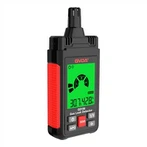
Principle and Application of Pump Suction Gas Detector
The working principle of the pump-suction gas detector is the same as that of the diffusion gas detector. The sensor of the instrument detects the sample gas, and then it is amplified and converted into the corresponding value by the circuit and displayed on the screen. Combustible gases are commonly used with catalytic combustion sensors. , Toxic gases are commonly used electrochemical sensors.
The pump-suction gas detector is equipped with a small air pump in the instrument. Its working method is that the power supply drives the air pump to extract and sample the gas in the area to be measured, and then send the sample gas into the instrument for detection.
Advantages and disadvantages of pump suction gas detector
The advantages of the pump-suction gas detector are: fast detection speed, long-distance measurement of dangerous areas, and safety of maintenance personnel. Others are the same as the diffusion gas detector.
The disadvantage is: the price is relatively expensive.
Application of Pump Suction Gas Detector
Pump-suction gas detectors are often used in special occasions, such as gas concentration detection in tunnels, pipelines, sewers, tanks, and sealed containers where people are not suitable or difficult to enter. The common ones are: pump-suction oxygen detector, pump-suction hydrogen sulfide detector, pump-suction chlorine gas detector, pump-suction hydrogen chloride detector, pump-suction combustible gas detector, etc.