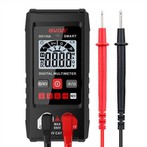
Principle, use and performance calibration of pH meter
pH meter is the most commonly used instrument and equipment. It is mainly used to accurately measure the pH value of liquid media. With the corresponding ion selective electrode, it can also measure the mV value of ion electrode potential. pH meter is widely used in industry, agriculture, scientific research, environmental protection, etc. In this field, people have scientifically researched and produced many models of acidimeters according to the needs of production and life.
According to the measurement accuracy, it can be divided into level 0.2, level 0.1, level 0.01 or higher accuracy.
According to the volume of the instrument, it can be divided into pen type (mini type), portable, desktop, and online type for continuous monitoring and measurement.
At present, my country's research and development level is still far behind. The more advanced one is the Swiss Mettler-Toledo pH meter, which is economical and convenient, has an accuracy of ±0.01pH, and can automatically perform temperature compensation.
The principle and structure of pH meter
A pH (acidity) meter is an instrument that measures the H+ activity in a solution using the potentiometric method. The value measured by a pH meter is a method used to express the pH of a solution. It is expressed by the negative logarithm of the H+ ion concentration in the solution, that is: pH=ーlg[H+].
The pH meter we use is composed of two parts: an electric meter and an electrode. In actual measurement, the electrode is immersed in the solution to be measured, and the H+ ion concentration in the solution is converted into a millivolt-level voltage signal, which is input into the electric meter. The electric meter amplifies the signal and logarithmically converts it into pH, and then the millivolt level display meter displays the pH.
The pH meter uses a glass electrode as the measuring electrode and a calomel electrode as the reference electrode. The change in the potential of the glass electrode caused by the change in hydrogen ion concentration causes a change in the potential between it and the calomel electrode, which should comply with formula (2-6)
E=E0-2.3026RT/F…………(2-6)
In the formula:
E - electromotive force, mV;
E0 - electrode standard electromotive force, mV;
R one mole gas constant;
T is the absolute temperature in Kelvin;
F - Faraday's constant.
It can be seen from equation (2-6) that temperature is also an important factor when measuring pH. When measuring, you should pay attention to the change of temperature and take it into consideration. At present, most of the commonly used electrodes for pH are composite electrodes, which combine glass electrodes and calomel electrodes.