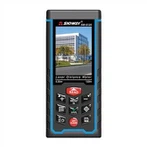
Proper use of infrared thermometers to diagnose equipment faults
The core issue of infrared diagnosis for equipment faults recommended by infrared thermometers is to accurately obtain the temperature distribution of the tested equipment or the temperature and temperature rise values of the fault related points. This temperature information is not only a basis for determining whether the equipment is faulty, but also an objective basis for determining the nature, location, and severity of the fault. Therefore, the calculation and reasonable correction of the temperature of the faulty parts of the tested equipment is a key step in improving the accuracy of the surface temperature of the detection equipment. However, when conducting infrared detection of equipment on site, changes in detection conditions and environmental factors may result in different results for the same equipment due to different detection conditions. Therefore, in order to improve the accuracy of infrared detection, corresponding countermeasures and measures must be taken during the on-site detection process or in the analysis and processing of the detection results, or good detection conditions must be selected, or reasonable corrections must be made to the on-site detection results.
The impact of the operating status of electrical equipment:
Electrical equipment faults are generally caused by heating faults due to current effects (conductive circuit faults - heating power proportional to the square of the load current value), and heating faults caused by voltage effects (insulation medium faults - heating power proportional to the square of the operating voltage). Therefore, the working voltage and load current of the equipment will directly affect the effectiveness of infrared detection and fault diagnosis. The increase in leakage current can cause uneven voltage in some high-voltage equipment. If there is no load running or the load is very low, it will cause the equipment to malfunction and heat up insignificantly. Even if there are more serious faults, they cannot be exposed in the form of characteristic thermal anomalies. Only when the equipment is operating at rated voltage and the load is higher, the heating and temperature rise become more severe, and the characteristic thermal anomalies of the fault point are exposed more clearly.