Refractometer Technical Questions
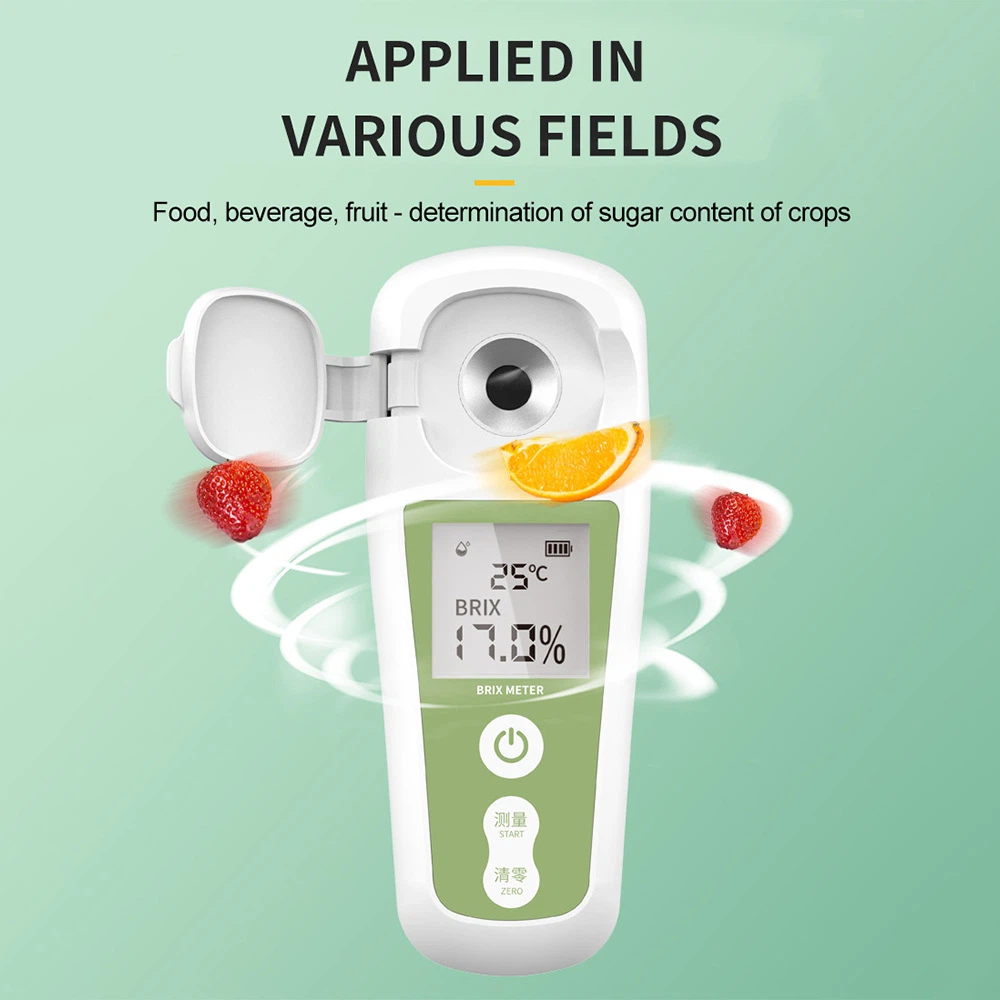
1. What are the classifications of refractometers, and what are their characteristics?
Answer: At present, the refractometers sold in China are mainly divided into handheld refractometers, portable refractometers, desktop Abbe refractometers, semi-automatic Abbe refractometers, and fully automatic refractometers. The first two domestic products are cheap and easy to test. The disadvantage is that the accuracy is relatively low. Japan’s ATAGO refractometers have relatively high precision, such as the PAL series; the semi-automatic Abbe refractometer reduces human error compared with the manual one. It also improves the test accuracy to a certain extent; automatic refractometer is the mainstream of laboratory testing in the future, which has the advantages of fast test speed, high efficiency, and accurate measurement. The disadvantage is that the price is relatively high, generally more than 100,000.
Two: What is the difference between the automatic refractometer and the Abbe refractometer?
Answer: 1. The automatic refractometer can test liquids, and the Abbe refractometer can measure both solids and liquids;
2. Abbe refractometers have certain requirements for measuring liquids, such as viscous and dark samples will reduce its measurement accuracy, while automatic refractometers do not have these concerns.
3. What are the specific application fields of the refractometer?
Answer: petrochemical industry, oil industry, pharmaceutical industry, paint industry, food industry, daily chemical industry, sugar industry, etc.
Petrochemical industry can be used for cutting oil, cleaning agent, chemical abrasive, cleaning solution, nickel plating solution, paper pulp, Freon 113, electric exchange fluid, silicon solvent (emulsion), protein solution, electrolyte, Freon 11, silicone oil, ethylene glycol Alcohol, propylene glycol, kerosene, vinyl acetate, diesel, polyvinyl chloride, styrene, kerosene C, polystyrene, polycarbonate, etc.
the
The food industry can be used for the detection of sugar, fruit thinning, non-alcoholic beverages, beer, wine, dairy products, chocolate, fat and oil, food additives, special foods, etc.
Cosmetic industry can be used for detection of perfume, skin cleanser, lotion, palm, cream, natural oil, sandalwood, lemon and lime etc.
Medical pharmaceuticals can be used for total parenteral nutrition (TPN), toxicology test (urine specific gravity), compound drug and drug transfer, enflurane, USP<831>, EP2.2.6, methanol, saline, aloe extract, sea water, acetone , ethanol, acetic acid, determination of solid percentage in serum and urine (blood sugar and urine sugar concentration), water purity inspection, purity inspection of raw materials, intermediate products and final products.
Four: Why do you need to control the temperature when testing the refractive index?
Answer: Because the temperature will affect the refractive index of the substance, and the influence of temperature on different substances is different, and the temperature deviation of the same substance is not linear. Only a few substances in the machine have a stable deviation coefficient or a temperature partial table. Most of the substance tests need to be measured at a specified temperature.
Five: How much does the temperature affect the test results of the sample?
Answer: The effect of different substances on temperature is uncertain, and the rate of change of the refractive index of the same substance at different temperatures is not linear, and the temperature of some substances has a greater influence on the refractive index, and the refractive index will change by 0.001 for every deviation of 1ºC. Above, while the refractive index of some substances is not sensitive to temperature changes, the refractive index may change by 0.0001 for every deviation of 1°C.
6. What are the advantages of products with built-in temperature control?
Answer: Compared with the external water bath, the Peltier temperature control has the advantages of small temperature control volume and fast speed. It is built into the instrument to facilitate the user to set various test requirements, avoiding the problems caused by multiple instruments working together. error or mistake.