Selecting Suitable Gas Detectors for Your Application
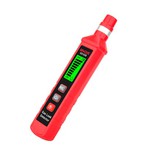
Gas detector is a measuring instrument used to detect gas leakage concentration, mainly using gas sensors to detect the composition and content of gases in the environment. Choosing the appropriate gas detector for various production scenarios and testing requirements is something that every person engaged in safety and testing work must pay great attention to.
Confirm the type and concentration range of the gas to be detected: The type of gas encountered by each production department is different. When choosing a gas detector, all possible scenarios should be considered. If methane and other less toxic hydrocarbons are predominant, choosing an LEL detector is undoubtedly the most suitable. This is not only because the principle of LEL detector is simple and widely used, but also because it has the characteristics of easy maintenance and calibration.
If there are toxic gases such as carbon monoxide and hydrogen sulfide, a specific gas detector should be prioritized to ensure the safety of workers. If there are more organic toxic and harmful gases, considering their low concentration that may cause poisoning to personnel, such as aromatic hydrocarbons, halogenated hydrocarbons, ammonia (amines), ethers, alcohols, lipids, etc., the photoionization detector introduced in the previous chapter should be chosen instead of using LEL detectors, as this may lead to casualties. If the gas types cover the above categories, choosing a composite gas detector may achieve twice the result with half the effort.