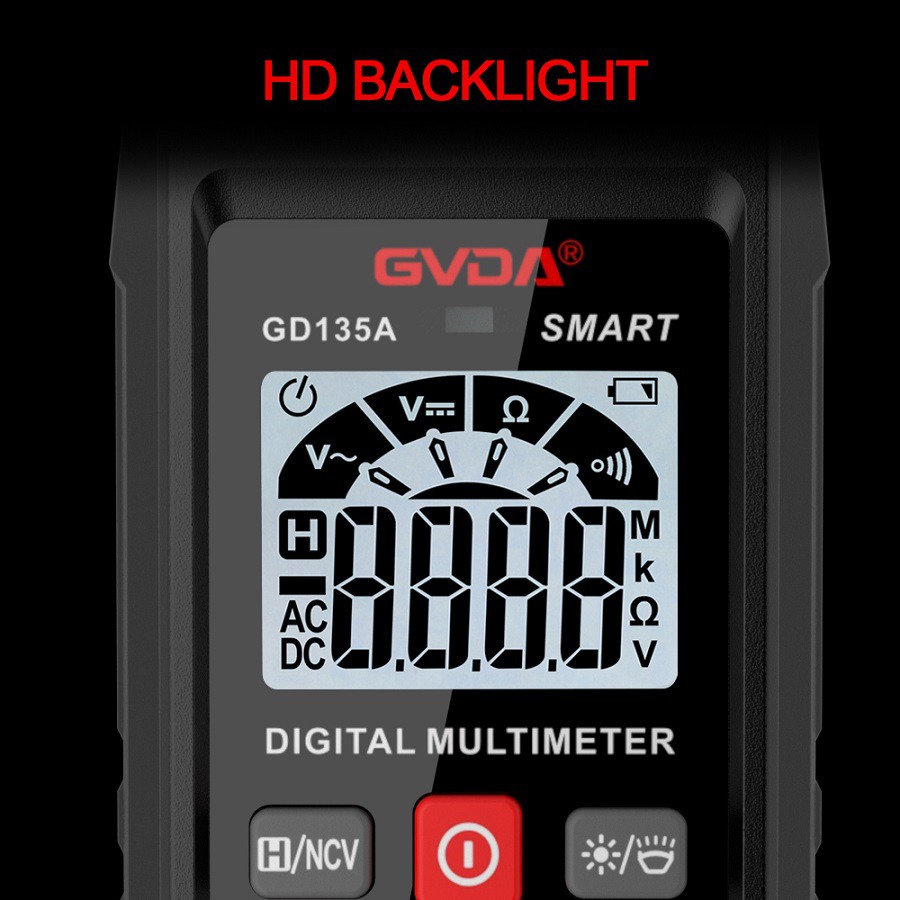
Selection of Digital Multimeters
1. Basic DC voltage accuracy
The various signals measured in a digital multimeter will ultimately be converted into DC voltage types for measurement through the circuit.
Therefore, the basic DC voltage accuracy of a digital multimeter has become the most important technical indicator for measuring the accuracy of a digital meter. And usually, the accuracy of the DC voltage marked on the digital meter should be the annual accuracy.
2. Reading resolution
It refers to the effective reading resolution value that can be displayed on the digital meter screen, or it can be simply understood that the number of digits behind the Decimal separator can be displayed on the screen at most when measuring small signals. For example, a six and a half digit multimeter usually displays a value of six digits after the Decimal separator when measuring 1V voltage.
3. Measurement type
The commonly used measurement types include AC/DC voltage, current, and resistance. The current digital multimeter can also provide functions such as capacitance, frequency, diode, conduction testing, any sensor measurement, and signal statistics.
4. Signal measurement range
The measurement range of different models of digital multimeter is different, for example, the Agilent 34401A current range is up to 3A. If I want to measure a current of 9A, I need to choose another model of digital multimeter. Please check the numerical range of the frequently measured data before making a selection.
5. Communication interface
There are four main types of communication interfaces for digital meters: USB, GPIB, LAN, and RS232. Mainly used for communication between instruments and computers, facilitating the timely transmission, storage, and analysis of measurement data. For example, it is more convenient for us to choose a LAN interface when placing instruments far from the computer. If the instrument is very close and only needs to provide high-speed data transmission, then USB will be very convenient. If it is conducive to system bus control integration, then GPIB will be very convenient.
Precautions for use:
1. When selecting the resistance gear, directly measure the voltage, and the multimeter will burn out.
2. When the probe is connected to the current test port, measure the voltage of the circuit. Because the internal resistance of the current connection port is very small, it will short-circuit the circuit, and the short-circuit circuit will instantly generate a large amount of current flowing through the multimeter, causing the multimeter to burn out.
3. If the probe is connected to the voltage test port to measure the current, the internal resistance of the Voltmeter is extremely large, and the multimeter will be connected in series to the circuit when measuring the current.
Therefore, the multimeter will be divided into the majority of the circuit voltage due to its extremely high internal resistance, causing the power of the entire circuit power to be added to the internal resistance of the multimeter, causing it to burn out.