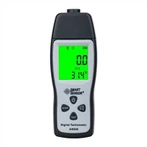
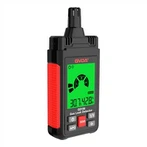
Selection of handheld infrared thermometer and portable hardness tester
In terms of performance indicators, such as temperature range, spot size, working wavelength, measurement accuracy, response time, etc; In terms of environment and working conditions, such as environmental temperature, window, display and output, protective accessories, etc; Other options, such as ease of use, maintenance and calibration performance, and price, also have a certain impact on the selection of temperature detectors. With the continuous development of technology, the excellent design and new advancements of infrared thermometers provide users with various functions and multi-purpose instruments, expanding their choices.
The environmental conditions in which the thermometer is located have a significant impact on the measurement results, and should be considered and appropriately addressed, otherwise it may affect the temperature measurement accuracy or even cause damage. When the ambient temperature is high and there is dust, smoke, and steam, accessories such as protective sleeves, water cooling, air cooling systems, and air blowers provided by the manufacturer can be selected.
These accessories can effectively address environmental impacts and protect the thermometer, achieving accurate temperature measurement. When determining attachments, standardized services should be requested as much as possible to reduce installation costs. When smoke, dust, or other particles reduce the measurement energy signal under noise, electromagnetic fields, vibrations, or difficult to access environmental conditions, or other harsh conditions, fiber optic dual color thermometers are the best choice. Under noise, electromagnetic fields, vibrations, and difficult to access environmental conditions, or other harsh conditions, it is advisable to choose a fiber optic colorimetric thermometer.
Signal processing function
Due to the difference between discrete processes (such as part production) and continuous processes, it is required that infrared thermometers have multiple signal processing functions (such as peak holding, valley holding, average value) to choose from. For example, when measuring bottles on a conveyor belt, peak holding is used, and the output signal of the temperature is transmitted to the controller. Otherwise, the thermometer reads the lower temperature value between the bottles. If peak holding is used, set the response time of the thermometer to be slightly longer than the time interval between bottles, so that at least one bottle is always in measurement.