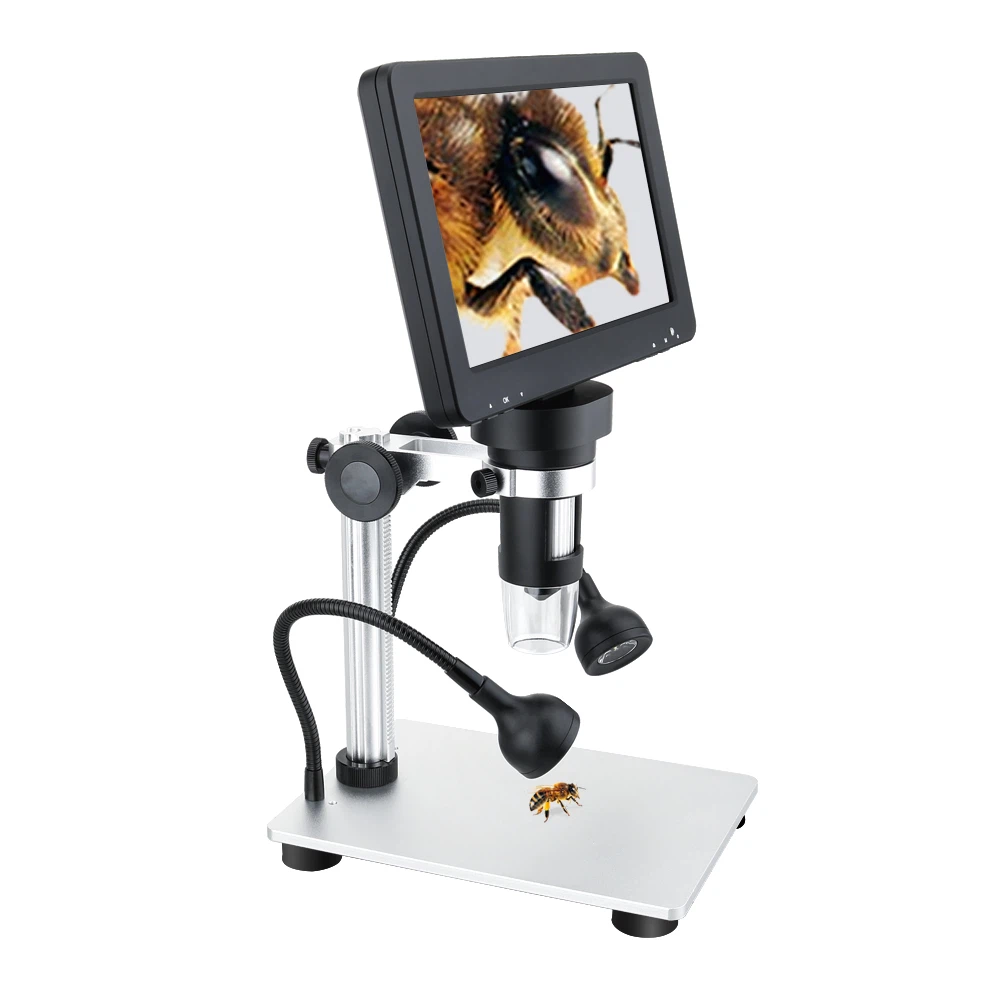
Several Applications of Metallographic Microscope in Production
1. Metallographic microscope inspection of raw materials: inspection of metallurgical quality of raw materials such as segregation, distribution type and level of non-metallic inclusions; inspection of casting porosity, pores, and slag inclusion structure uniformity of cast materials; surface decarburization of forgings, Check for overheating, overburning, cracks, deformation, etc.
2. Quality control in the production process: metallographic microscope can provide the basis for adjusting the process and modifying the process parameters, and guide the production, such as whether the heat treatment quenching heating temperature, heat preservation time, cooling speed, etc. are appropriate (correct); the control of chemical surface heat treatment process parameters ; Whether the initial and final forging temperatures of forging are appropriate, etc.
3. Failure analysis of metallographic microscope: metallographic structure analysis method is widely used in mechanical failure analysis, and it is very convenient to identify some common defects. Such as surface decarburization of machine parts; morphology and distribution characteristics of microcracks; chemical heat treatment defects; abnormal structure after heat treatment; brittle phase precipitation at grain boundaries, etc. The results of these metallographic analyzes are often used as the basis for failure analysis.
4. Product quality inspection: In addition to mechanical performance and physical performance indicators, some mechanical parts or products also require microstructural parameters as one of the technical indicators for quality assessment.
Precautions for Metallographic Microscope
1. When holding the mirror, you must hold the arm with your right hand and hold the seat with your left hand. Do not pick it up with one hand to avoid parts falling off or colliding with other places.
2. Handle with care, do not place the microscope on the edge of the laboratory table, so as not to knock it over and fall to the ground.
3. Keep the microscope clean. The optical and lighting parts can only be wiped with lens cleaning paper. Do not wipe with your mouth or hands or with a cloth. Wipe the mechanical part with a cloth.
4. Do not allow water droplets, alcohol or other drugs to touch the lens and mirror stand. If it is stained, wipe it off immediately.
5. When placing the slide specimen, it must be aligned with the center of the light hole, and the slide cannot be reversed to prevent the slide from being crushed or the objective lens damaged.
6. To develop the habit of opening both eyes at the same time, observe the field of vision with the left eye, and use the right eye for drawing.
7. Do not remove the eyepiece at will to prevent dust from falling into the objective lens, and do not disassemble various parts at will to prevent damage.
8. After use, it must be restored before it can be put back into the mirror box. The steps are: remove the specimen sheet, turn the rotator to move the lens away from the light hole, lower the stage, place the reflector flat, and lower the light collector (but do not touch it. Reflector), close the aperture, return the film pusher, cover with silk cloth and outer cover, and put it back into the laboratory cabinet. Finally, fill out the registration form. (Note: The reflector should usually be placed vertically, but sometimes due to the It is not mentioned to the proper height, and the aperture will be damaged when the mirror stage is lowered, so it is changed to lay flat here)