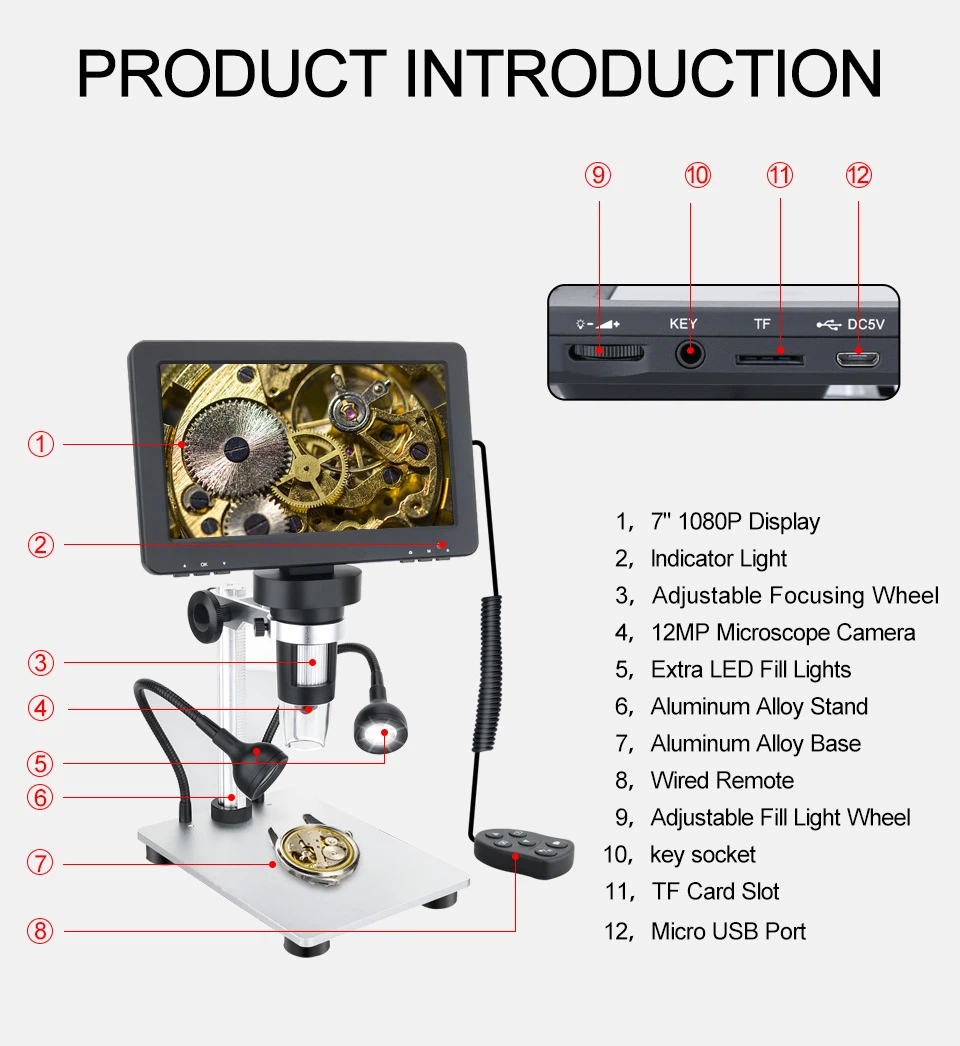
Several major features of metallographic microscopes
Metallographic microscopy is one of the important means of experimental research on metal materials. It uses the principle of quantitative metallography to determine the three-dimensional spatial morphology of the alloy structure by measuring and calculating the metallographic microstructure of the ground surface of the two-dimensional metallographic sample or the film, thereby establishing Quantitative relationship between alloy composition, structure and properties. Applying the image processing system to metallographic analysis has the advantages of high precision and fast speed, which can greatly improve work efficiency.
1. High accuracy: The software of the metallographic microscope has 200 standards built in, and you can add them by yourself. The metallographic analyzer uses automatic control and comparison to achieve high accuracy, avoid errors, and have good repeatability.
2. Easy operation: The metallographic microscope has a high degree of automation, a full Chinese interface operation, and a combination of controllable, adjustable, and automated operations.
3. Short detection time: The metallographic analyzer formed by combining the highly automatic operation interface of the metallographic microscope and the microscope of China Materials Microscope Network greatly shortens the time for testing samples and greatly improves work efficiency.
4. Data preservation: The metallographic microscope outputs in multiple formats, and the combination of multiple saving modes ensures that the pictures will not be lost, eliminating your worries.
Precautions when using metallographic microscopes:
(1) You must be particularly careful when operating and do not make any violent movements. It is not allowed to disassemble the optical system by yourself.
(2) It is strictly forbidden to touch the glass part of the microscope lens and the sample grinding surface directly with your fingers. If there is dust on the lens, it will affect the clarity and resolution of the microscope. At this time, you should first blow off the dust and sand with an ear cleaning ball, and then wipe it gently with lens paper or a brush to avoid scratching the lens glass when wiping directly and affecting the use effect.
(3) Do not plug the microscope light bulb (6~8V) directly into the 220V power socket. It should be plugged into a transformer, otherwise the light bulb will burn out immediately. The power should be turned off promptly after the observation.
(4) When rotating the coarse adjustment (or fine adjustment) handwheel, move slowly. When encountering some obstacle, stop the operation immediately and report to the instructor to find the cause. Do not use force to turn it, otherwise the machine parts will be damaged.