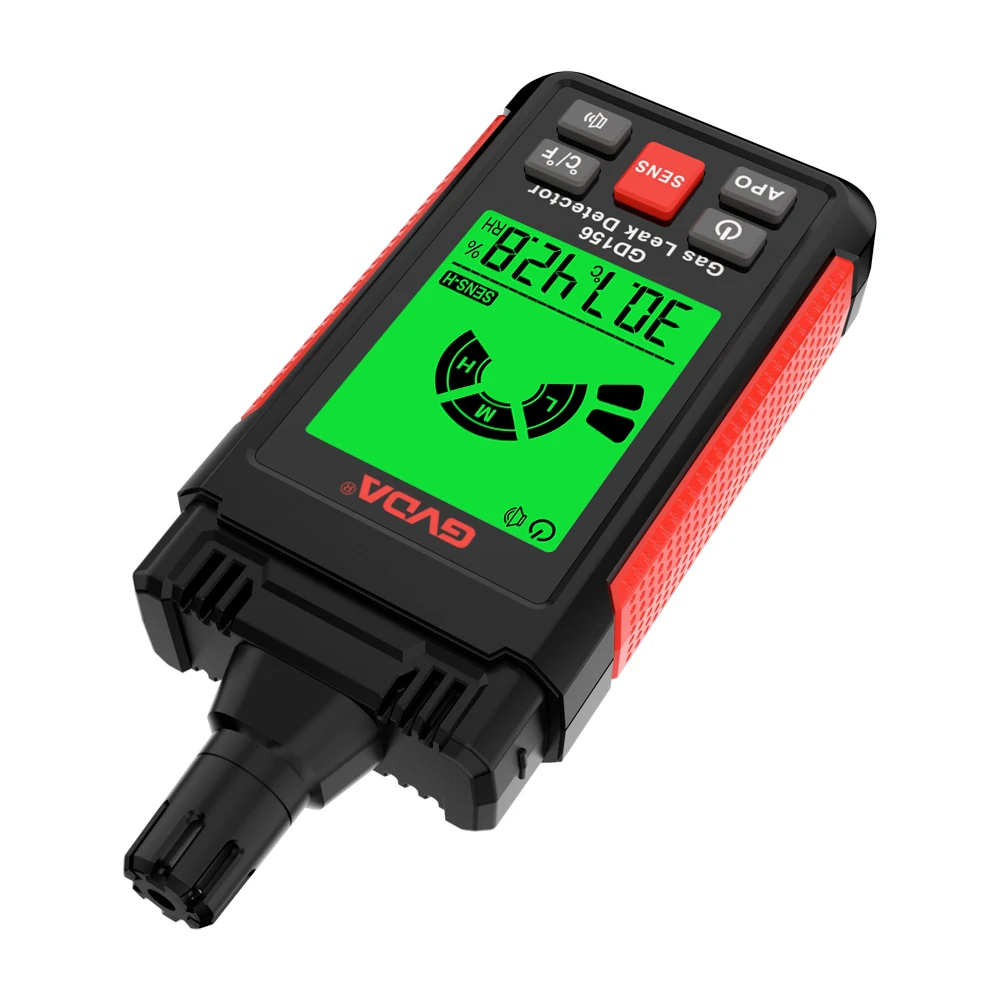
Some Classifications of Portable Gas Detectors
Portable gas detectors are divided into diffusion‑type and pump‑suction types according to their sampling principle. For diffusion‑type detectors, the probe is placed in hazardous zones with target gas; the gas under test diffuses into the probe, while the alarm unit is installed in the monitoring room for indication and alarm output. For pump‑suction detectors, target gas is pumped into the detection probe. The suction pump is integrated with the on‑board detector, which is deployed at hazardous gas‑leakage locations to perform indication and alarm functions.
Classified by gas type, they fall into toxic‑gas detectors and combustible‑gas detectors. Classified by sampling mode, they are natural‑diffusion gas detectors and pump‑suction gas detectors. Classified by measurable‑gas quantity, they are single‑gas detectors and multi‑in‑one gas detectors.
Combustible Gas Detector It is a detector responding to the concentration of single or multiple combustible gases. Smart sensing transmitters adopted in detectors deliver the most comprehensive functions. Infrared combustible‑gas detectors are the ideal choice for the following application conditions: frequent exposure to catalytic poisons, frequent high‑concentration combustible‑gas emission, oxygen‑deficient environments, and hard‑to‑access detection locations.
Diffusion‑type Gas Detector Gas from the monitored area flows into the instrument slowly via natural air movement for measurement, and the device shall be installed on‑site. This sampling mode is subject to environmental factors such as ambient temperature and wind speed, and is not suitable for gas sources at low pressure. The advantage of diffusion‑type gas detectors is lower cost compared with pump‑suction models.
Pump‑suction Gas Detector Equipped with a gas sampling pump driven by power supply, it draws gas samples from the target area and feeds sample gas into the instrument for measurement. It features fast detection response and supports remote measurement in hazardous areas to protect maintenance personnel. It is suitable for scenarios where the detector cannot be placed on‑site, or special requirements are imposed on response speed and pressure difference.
Single‑gas Detector Adopting high‑performance catalytic‑combustion sensors, it is applied in petrochemical industry, environmental accident response, natural gas, liquefied petroleum gas, coal gas and other sectors to measure various combustible gases including alkanes, liquefied petroleum gas, natural gas, hydrogen, etc.
Multi‑in‑one Gas Detector This detection instrument can be fitted with single or multiple gas sensors. Configurations include single‑gas, two‑in‑one, three‑in‑one, four‑in‑one, or optional four toxic‑gas sensors, or any single‑gas sensor for detection purposes.