Steps for Measuring Leakage Current with a Multimeter
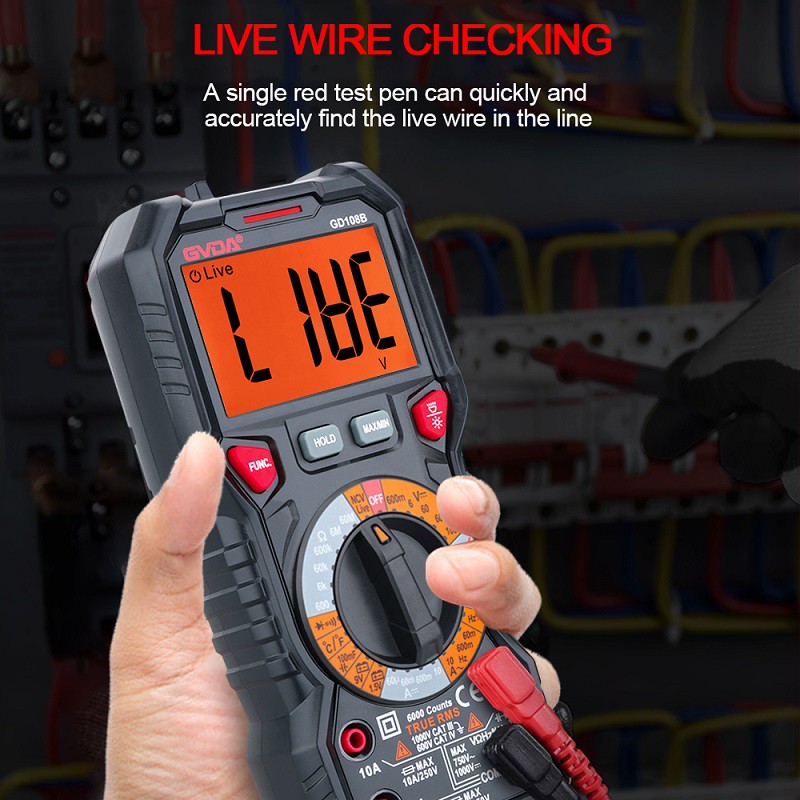
Leakage refers to the abnormal flow of current in a circuit, exceeding the range that the equipment or circuit can withstand, causing the current to flow to the ground through other paths, thereby causing electrical failure or personal injury. In order to detect and solve leakage problems in a timely manner, a multimeter can be used for measurement.
Preparation: Before conducting leakage measurement, it is necessary to first turn off the power switch and disconnect any equipment or power related to the circuit.
Prepare measuring leads: Ensure that the measuring leads of the multimeter are in normal condition, well connected, and not broken or damaged.
Connect the circuit: Connect the red measuring lead to the positive pole or corresponding position of the cable of the circuit under test, and connect the black measuring lead to the negative pole or corresponding position of the cable of the circuit under test.
Select measurement mode: Set the multimeter to DC current measurement mode, usually marked with the symbol 'A' or a similar symbol.
Turn on the power: Connect the power, turn on the leakage protector or switch, and let the current pass through the circuit under test.
Measurement: With the power on, gently touch the red measuring lead to the positive pole or cable end of the circuit under test, and the black measuring lead to the negative pole or cable end of the circuit under test. Observing the display of the multimeter, the recorded value is the leakage current value in the circuit under test.
Analysis result: Based on the obtained measurement results, determine whether there is a leakage problem. Generally speaking, if the leakage current value exceeds 5mA, it is considered leakage and timely measures need to be taken to repair the circuit.
Turn off the circuit and backup data: After completing the leakage test, turn off the power switch, disconnect any equipment or power related to the circuit, and backup the measurement data for future analysis.