Switching power supply fault detection methods
After a basic understanding of the switching power supply, let's look at the fault detection and repair methods.
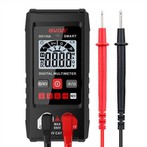
First of all, you should observe whether the power supply fuse is damaged. If the fuse is damaged, you can not rush to replace it, you must first check whether the power supply is short-circuited. Method: use the multimeter resistance block test power supply fuse after the AC terminal (test point one), its normal resistance should be tens of kilo-ohms above, such as resistance is zero, then the power supply exists in the AC short-circuit phenomenon. In addition, we should also focus on checking the power supply AC filter capacitor is damaged; at the same time, if there is a varistor, you should also check this resistor.
If the above test results are normal, we should then test the power supply of the four rectifier diodes (test point two). In the normal state, the forward resistance of the diode is a few k (with a multimeter × 1k block test), the reverse resistance is close to infinity. If the test results are found to be abnormal, they need to be replaced. Along the line down, the next thing to do is to test the power supply DC resistance of this part (test point three), its normal resistance is also in the number of k, such as resistance is zero, it means that there is a DC short circuit. Causes of DC short circuit is more, like filter capacitor short circuit damage, power supply oscillation tube damage, oscillation integrated block and peripheral circuit part of the damage may cause short circuit phenomenon. Here, it should be noted that before replacing the power supply oscillator, you must determine the oscillation block and the peripheral circuit is normal, otherwise it will cause the power supply tube is damaged again.
Excluding the switching power supply after the above problems, indicating that most of the fault exists in the oscillation control circuit, sampling feedback circuit or load. At this point, we should first check whether the oscillation integrated block power supply circuit is normal (test point four), its normal voltage should be about 10V (special reminder: due to the test voltage should be carried out in the case of power, and the power supply board has a high-voltage utility, so pay special attention to personal safety, do not try to touch any part of the power supply directly).
If there is no voltage at the point or the voltage is very low, firstly, check whether the buck resistor is damaged; secondly, check whether the oscillation integrated block and its external power supply circuit are normal. If the peripheral circuit is not found fault, it is recommended to replace the oscillation block. Of course, sometimes the power supply can not be normal output voltage may also be due to short-circuit load so that the power protection caused. For this power supply, we only need to unplug the output line, check whether the output voltage is normal (test point five), you can determine the fault site. After the previous troubleshooting, and finally should check the feedback circuit part, generally speaking, this part of the failure is mainly concentrated in the photocoupler and its amplifier circuit, pay special attention to.
Summary
Of course, the above method does not solve all the problems of the power supply, but for the switching power supply is more likely to occur in the day-to-day some of the problems are still effective. I hope that through this introduction, can play a role of a brick to attract jade, to solve the small problems encountered in the switching power supply to help.