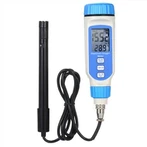
Ten precautions for the use of a composite gas detector
The composite gas detector can detect single or multiple gases and can perform excellently in many work environments. It has an extremely wide range of applications and is an important instrument for ensuring production and personal safety. It has the advantages of fast speed, high measurement accuracy, good stability and repeatability. But there are still many things that consumers need to pay attention to. Today, the editor will share with you ten precautions for using composite gas detectors. Let's take a look together~
1. Before using the composite gas detector, please carefully read the product manual, and it is strictly prohibited to open the cover and replace the sensor with electricity on site.
2. When installing, debugging, and setting up the composite gas detector, it must be carried out by professionals and non professionals are not allowed to operate it.
3. Calibration and inspection of composite gas detectors should be carried out regularly, and sensors that have exceeded their effective use period or have faults should be replaced in a timely manner.
4. It is strictly prohibited to use gas that exceeds the measurement range to impact the sensor. It is strictly prohibited to expose the instrument to high concentration corrosive gas environment for prolonged operation to prevent damage to the sensor. It is strictly prohibited to use in high temperature and high humidity environments. If the usage environment has high humidity, a filtering and dehumidification device must be added.
5. Prevent the instrument from falling from a height or being subjected to severe vibrations and impacts. Users are not allowed to start the machine for maintenance or replace parts without authorization.
6. Charging must be carried out in a safe place and use the dedicated charger provided with the device. It is strictly prohibited to dismantle, charge or replace batteries in hazardous areas. Battery replacement must be carried out in a safe location using the same model of battery.
When used in explosive environments, do not touch or wipe the equipment. If wiping or touching is necessary, it should be done in a safe place and the outer shell should be wiped with a wrung out damp cloth. It is strictly prohibited to wipe the outer shell with a dry cloth.
8. Avoid ignition hazards caused by electrostatic charges during normal use, maintenance, and cleaning of the instrument. Before entering the hazardous area, the portable composite gas detector releases static electricity from the human body and then carries the instrument to the site.
9. It is not allowed to replace components or structures that affect explosion-proof performance at will, in order to avoid affecting explosion-proof performance.
When the composite gas detector cannot work properly, the battery voltage should be checked first to ensure it is normal.