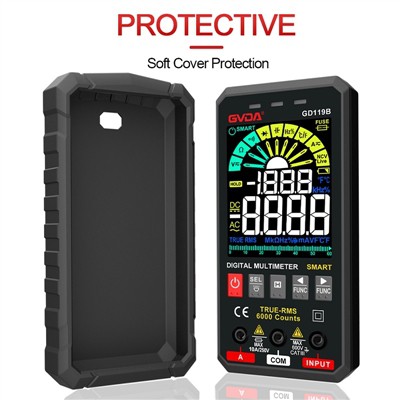
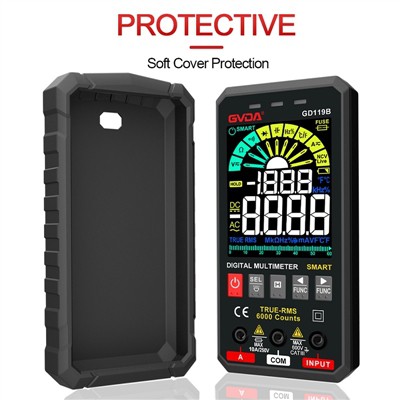
Test the moisture content and other qualities of wood using a moisture tester.
When a living tree grows, its roots continuously absorb water from the soil, and the xylem of the trunk sends water to various organs of the tree, and at the same time, the nutrients produced by photosynthesis of leaves are transported from the phloem of the trunk to various organs of the tree. part. Moisture is not only the most important substance for tree growth, but also the carrier for trees to transport various substances. After the living tree is felled and sawn into boards and squares of various specifications, most of the water still remains inside the wood, which is the moisture in wood. At the same time, wood will also absorb some moisture into its interior during storage, transportation or use.
For different tree species, the moisture content of xylem in the trunk is different. Even the same tree has different water content in its xylem in different growing seasons. Each part of xylem, such as heartwood, sapwood, root, trunk and treetop, has different water content, so the water distribution in wood is very uneven. When the atmospheric conditions around the wood change, its moisture content will also change accordingly. The moisture can be divided into three types: free water, adsorbed water, and combined water because of its different positions in the wood:
(1) Free water exists in the large capillary system composed of the pits on the wood cell wall or the perforation at the end of the conduit, the cell cavity and the intercellular space. The free water is physically combined with the wood, and the combination is not tight. This part of the water It is easy to escape from the wood, and it is also easy to inhale. When wet wood is placed in dry air, the first thing to evaporate is free water. For freshly felled raw wood, the free water content of different tree species varies greatly, generally Between 60~70% and 200~250%.
(2) Adsorbed water exists in the micro-capillary system formed between the microfibrils and macrofibrils in the wood cell wall or adsorbed on the free radicals of cellulose molecules on the surface of the microcrystal and in the amorphous region. Adsorbed water in wood There is little difference in the content among tree species. The maximum content of water absorbed by wood is generally between 23% and 31%, and the average is about 3%. The water absorbed is closely combined with the wood substance, and this part of water is not easy to escape from the wood. Only When the free water in the wood evaporates completely, and the partial pressure of water vapor in the wood is greater than the partial pressure of water vapor in the surrounding wall air, it can evaporate from the wood.
(3) Combination water and cell wall components are in a strong chemical combination state. The content of this part of water in wood is very small and can be ignored, and it cannot be removed under normal dry conditions.
2. Wood moisture and indoor environment
In the indoor environment where people live, the humidity should not fluctuate too much, and should be stable within a certain range, which is very beneficial to personal health and the preservation of objects. Research data show that: the relative humidity range for preventing wet mold is 0-80%; for preventing insect damage, it is 0-70% or 80-100%; for preserving books, it is 40-60%; for preventing bacterial infection, it is 55-60%; The lowest rate is 60-70%, and the relative humidity of the human living environment should be around 60, which is more suitable.
There are many factors that cause changes in indoor humidity, for example: external temperature changes or indoor temperature changes will cause humidity changes; water vapor flowing in or out from the transom or ventilation openings, water vapor penetrating through the wall, water vapor coming in from the kitchen, etc. It can also cause changes in humidity.
The humidity-regulating property of wood is one of the unique properties of wood, and it is also the advantage of it as an interior decoration material and furniture material. The humidity change of houses decorated with wood or wood materials is much faster than that of concrete houses or houses decorated with wallpaper. Small. The so-called moisture-regulating characteristics of wood is to directly alleviate the humidity change of the indoor environment by the moisture absorption and desorption of the wood itself. When the relative humidity of the indoor environment decreases, the water vapor partial pressure balance between the indoor environment and the wood is broken. The water vapor partial pressure inside the wood is higher than that of the indoor environment, and the moisture inside the wood will escape. Increase the relative humidity of the indoor environment, which is the desorption process. Conversely, when the relative humidity of the indoor environment increases, wood will absorb moisture from the indoor air, which is a hygroscopic process. At the beginning of the desorption or moisture absorption process, the wood proceeds very strongly, after which it gradually slows down until a new dynamic equilibrium is reached. Here wood acts as a storage of moisture, just like a natural regulator of indoor air humidity. People have been accustomed to living in the environment of wooden furniture and wooden interior decoration materials for a long time.