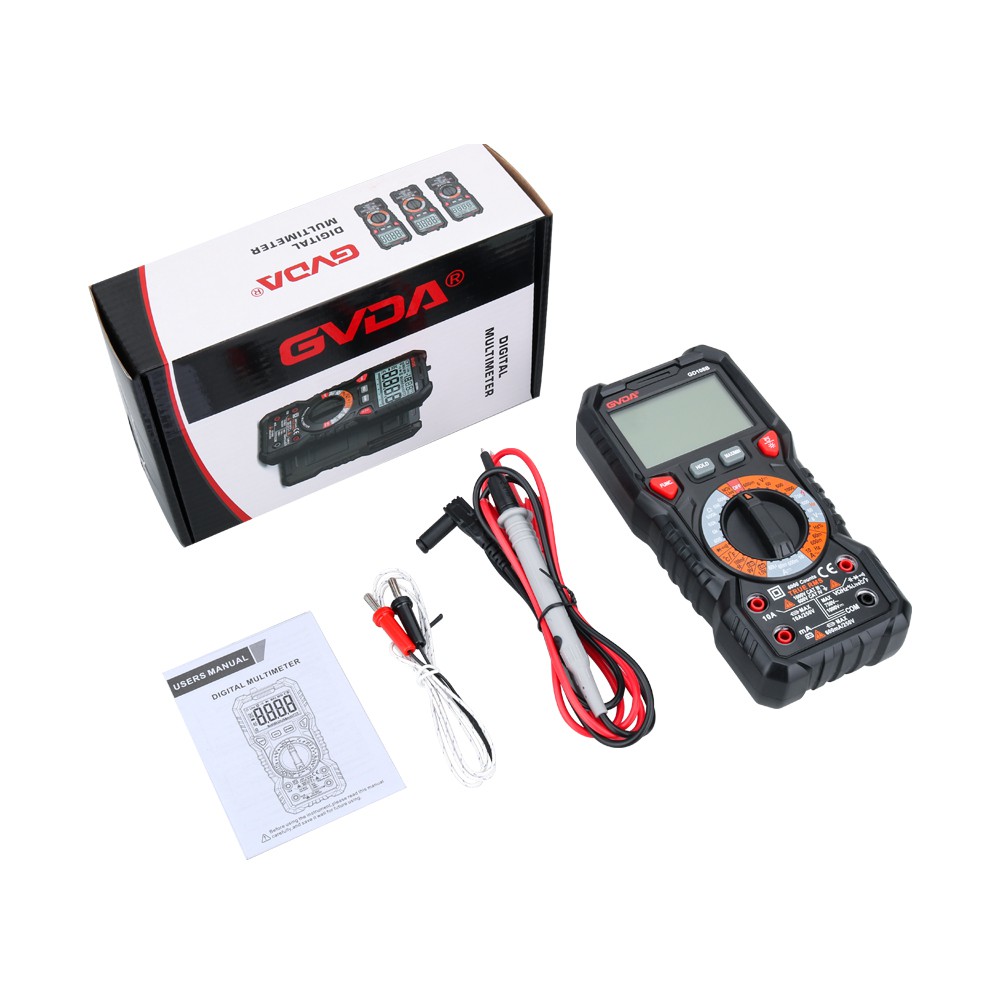
The detection of faulty capacitors is usually carried out using a multimeter.
Pointer multimeter to detect capacitor failure
1, non-polar capacitor fault detection:
Detection of the first pointer multimeter for mechanical zeroing. Then select the multimeter Rx10k ohm file, the table of the red and black pens were contacted to be tested capacitance of the two pins, observe the multimeter indication of the change in resistance value.
If the pen is connected to the moment, the pointer to the right tiny swing and then back to infinity; switch the pen to re-measurement, the pen is connected to the moment, the pointer is still to the right tiny swing back to infinity, then this capacitor is normal.
If the multimeter is connected to the moment, the pointer swings to the right near 0, then the capacitor serious leakage or has been broken.
If the multimeter is turned on instantly, the pointer can not return to infinity after swinging to the right, indicating that the capacitor leakage.
If the multimeter is turned on instantly, the pointer does not move, indicating that the capacitor is open circuit.
2, electrolytic capacitor fault detection:
Electrolytic capacitors are capacitors with polarity. Before testing, use a screwdriver or a word to discharge the residual charge of the capacitor. Then use the black pen of the multimeter connected to the positive terminal of the capacitor, the red pen connected to the negative terminal, and observe the swing of the meter pointer.
In the moment just turned on, the multimeter should be deflected to the right at a greater angle, and then return to the left. Until it comes back to a stop somewhere, the resistance value measured at this time is the capacitor positive insulation resistance. The resistance measured after switching the meter pens is the reverse insulation resistance of the capacitor.
If the pointer of the table does not move, it means that the capacity of this capacitor disappears or internal disconnection.
If the table measured capacitance of the positive and negative insulation resistance are very small or 0, then the capacitor leakage or internal short circuit.
Digital multimeter to detect capacitor failure
The digital multimeter will be placed in the capacitance file, according to the size of the power to choose the appropriate gear. After the capacitor to be tested is fully discharged, the two pins of the capacitor will be directly inserted into the test hole for measurement; or the two pens will be directly contacted with the pins of the capacitor for measurement, at this time, the multimeter will directly display the capacity of the capacitor under test.
Measurement of electrolytic capacitors with a digital multimeter, the capacitor to be measured after fully discharged, should be the red pen contact capacitance of the positive terminal of the table, the black pen connected to the negative terminal of the capacitance, this time measured is the capacitance of the positive insulation resistance, and vice versa, the measured resistance that is the negative insulation resistance.
Capacitor replacement skills:
1, the replacement capacitor capacity and the original capacitance capacity is basically the same.
2, high voltage capacitance can be replaced by low voltage capacitance, but low voltage capacitance can not replace the high voltage capacitance.
3, small-capacity capacitors can be replaced in parallel with large-capacity capacitors; large-capacity capacitors can be replaced in series with small-capacity capacitors.
4, electrolytic capacitors can be replaced with non-polar capacitors.
5, for high-frequency oscillation capacitors and power supply filter capacitors, can not be replaced by ordinary capacitors.