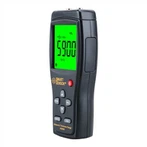
The difference between night vision and thermal imager
1. Effectiveness
1) If you've ever used regular night vision equipment, you'll notice that night vision equipment and regular infrared thermal imagers have very different observational sensations. This is so that the field of view observed is identical to that seen by the telescope lens, which is round and produces a green image, while the general night vision equipment directly examines the target through the lens. If the clarity is sufficient, it is possible to recognize the character's intended audience as well as their target's distinct facial features.
2) The field of view is square because the infrared night vision thermal imager views the image on the internal LCD screen rather than the target directly. Based on the temperature distribution, the infrared night vision thermal imager will image. The brightness increases with increasing temperature. On the other hand, the hue gets darker as the temperature drops. Finding the target and identifying the target category—such as whether the target is a person, an animal, etc.—are the key goals.
2. The influence of light factors
1) Due to the imaging principle, the second-generation + night vision gadget is significantly impacted by the environment. Dimming the light will shorten the observing distance, especially when light is present. The usage of the supplementary infrared light source is required in the event of complete darkness, and its range is typically limited to 100 meters. While many conventional night vision equipment have powerful light shielding, they will also be terrified of intense light at the same time. However, a significant change in ambient brightness will have a significant impact on the observation.
2) Light will not harm an infrared thermal imaging night vision gadget. The target object can be seen clearly whether it's day or night, or if it's raining, snowing, or foggy outside. For this reason, high-end automobile night vision systems like Mercedes-Benz and BMW employ infrared thermal imagers.
a thermal camera
The use of infrared thermal imaging technology is not just limited to the military. It started off in the military and gradually transitioned to civilian use. In civilian usage, it is typically referred to as a thermal imager, and it is mostly employed in research and development, industrial inspection, and equipment maintenance. It is also commonly utilized in security, fire prevention, and night vision. A thermal imager, to put it simply, transforms an object's invisible infrared energy into an image that can be seen. The temperature of the measured object is represented by various colors at the top of the thermal image.
a night vision system
When it operates, the nighttime external sight with the image intensifier at its core does not illuminate the target with infrared searchlights but instead enhances the light reflected from the target in low light so that it can be seen by the human eye on the fluorescent screen through the image intensifier. Target. A military night vision device that uses photoelectric conversion technology is infrared. IIt comes in two flavors: active and passive. The former uses infrared searchlights to irradiate the target and collects reflected infrared radiation to create an image; the latter does not emit infrared rays but instead relies on the target's own infrared radiation to create a "thermal image," hence the name "thermal image instrument."