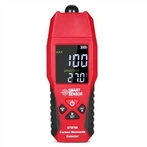
The distinction between eddy current (non-ferrous base) and magnetic (iron base) covering thickness gauges
Coating Thickness Gauge Magnetic (iron-based) to measure the thickness of non-magnetic coatings (such as aluminum, chrome, copper, enamel, rubber, paint, etc.) on magnetic metal substrates (such as steel, iron, alloys and hard magnetic steel, etc.)
Coating thickness gauge eddy current (non-ferrous base) measures the thickness of non-conductive coatings (such as: enamel, rubber, paint, plastic, etc.) on non-magnetic metal substrates (such as copper, aluminum, zinc, tin, etc.).
Magnetic (iron-based) Type F:
Measuring the thickness of non-magnetic coatings on ferromagnetic metal substrates such as steel and iron, such as: paint, powder, various anti-corrosion coatings, plastics, rubber, synthetic materials, phosphating layers, chromium, zinc, lead, tin, cadmium wait;
Eddy current (non-ferrous) type N:
Measure the thickness of all non-conductive layers on non-ferromagnetic substrates such as copper, aluminum, stainless steel, such as: paint, powder, various anti-corrosion coatings, plastics, rubber, synthetic materials, phosphating layers, oxide layers, etc.;
FNF type:
It is a combination of the above F-type and N-type, which is what we often call a dual-purpose thickness gauge.
Application fields of coating thickness gauge
The coating thickness gauge can non-destructively measure the thickness of non-magnetic coatings (such as aluminum, chromium, copper, enamel, rubber, paint, etc.) The thickness of a non-conductive coating (eg, enamel, rubber, paint, plastic, etc.) on a metal substrate (eg, copper, aluminum, zinc, tin, etc.).
1. Electroplating and spraying: Metal surface electroplating or spraying is an effective way to protect the service life of raw materials and play an aesthetic role. Therefore, a large number of electroplating factories and spraying industries have sprung up. At the same time, coating thickness gauges are also developed for the development of the coating industry. .
2. Metal hardware industry: metal workpieces are prone to oxidation and corrosion when they are exposed to the air for a long time. Therefore, one or more layers of protective coatings are required on the surface, and buyers and sellers need to test the products.
3. Machinery manufacturing industry: chrome plating of molds, hard chrome plating of rollers, chrome plating of automobile surfaces and galvanization of accessories all require coating thickness detection, so that the workpiece can be more effectively protected.
4. Steel structure: For our products, such enterprises can also be classified as an industry separately. Coating thickness gauges are indeed widely used in this industry, including iron towers, bridges, brackets, road barriers, ship plates, etc. Many related manufacturers have purchased them, and the demand is also large.