
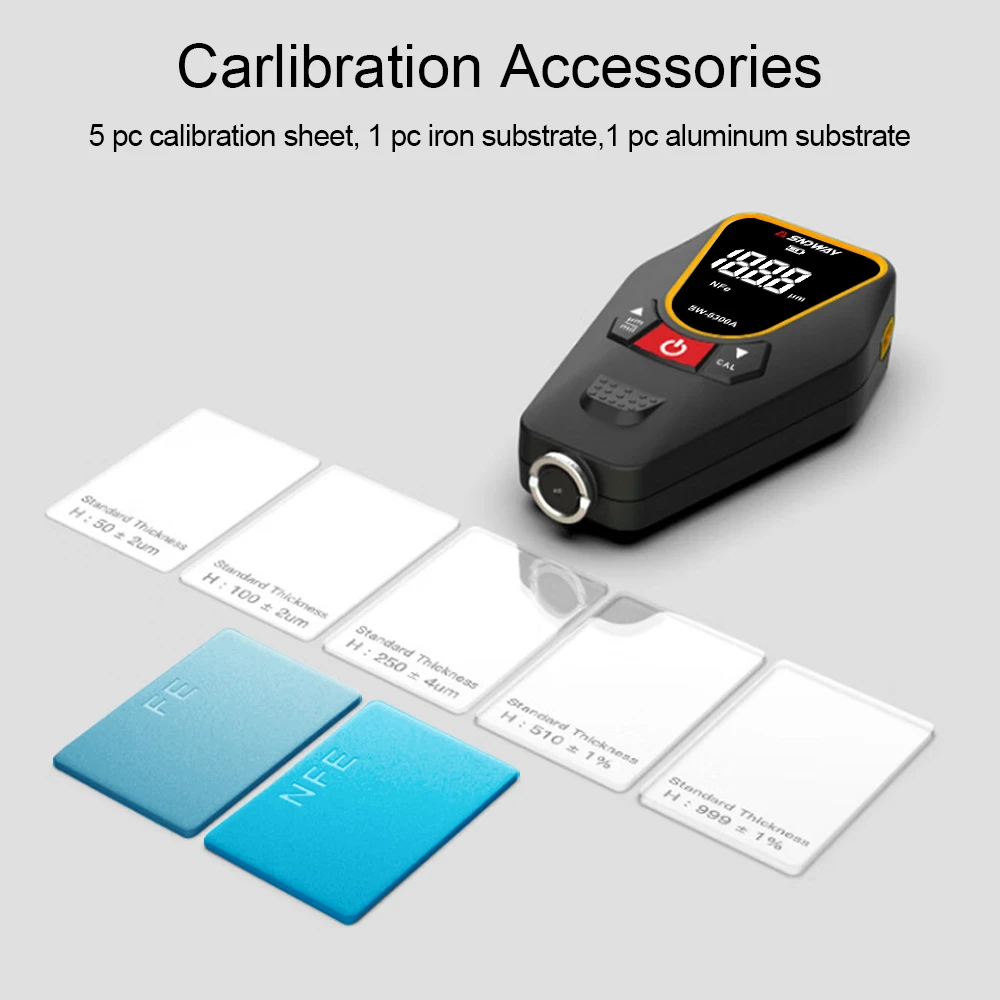
The distinction in coating thickness gauge between F, N, and FN
F stands for ferrous ferromagnetic substrate. The F-type coating thickness gauge uses the principle of electromagnetic induction to measure non-ferromagnetic coatings and coatings on ferromagnetic metal substrates such as steel and iron, such as: paint, powder, plastic, rubber , synthetic materials, phosphating layer, chromium, zinc, lead, aluminum, tin, cadmium, porcelain, enamel, oxide layer, etc.
N stands for Non-ferrous non-ferrous substrate. N-type coating thickness gauge adopts the principle of eddy current; to measure the enamel, rubber, paint, plastic layer, etc. on copper, aluminum, zinc, tin and other substrates with eddy current sensors.
The FN type coating thickness gauge adopts both the principle of electromagnetic induction and the principle of eddy current. It is a two-in-one coating thickness gauge of F type and N type.
Function: Measure the thickness of the non-magnetic coating on the magnetic conductive object and the non-conductive coating on the non-magnetic metal substrate
Application: Use magnetic sensors to measure non-ferromagnetic coatings and coatings on ferromagnetic metal substrates such as steel and iron, such as paint, powder, plastic, rubber, synthetic materials, phosphating layers, chromium, zinc, lead, aluminum, Tin, cadmium, porcelain, enamel, oxide layer, etc. Use eddy current sensors to measure enamel, rubber, paint, plastic layers, etc. on copper, aluminum, zinc, tin, etc. substrates. Widely used in manufacturing, metal processing, chemical industry, commodity inspection and other testing fields.
Classification and Application of Coating Thickness Gauge
1. Magnetic thickness measurement method: It is suitable for measuring the thickness of the non-magnetic layer on the magnetic conductive material. The magnetic conductive material is generally: steel, iron, silver, nickel, and this method has high measurement accuracy
2. Eddy current thickness measurement method: It is suitable for measuring the thickness of non-conductive layer on conductive metal. This method is less accurate than magnetic thickness measurement method.
3. Ultrasonic thickness measurement method: At present, there is no such method in China to measure the thickness of the coating. Some foreign manufacturers have such instruments, which are suitable for the measurement of the thickness of multi-layer coatings or the occasions where the above two methods cannot be measured, but Generally expensive and the measurement accuracy is not high.
4. Electrolytic thickness measurement method: This method is different from the above three methods. It does not belong to non-destructive testing and needs to destroy the coating. The general accuracy is not high. It is more troublesome to measure than other types.
5. Radiation thickness measurement method: This kind of instrument is very expensive (generally more than 100,000 yuan), and it is suitable for some special occasions.
The most common methods used in China at present are methods 1 and 2.


