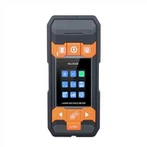
The fault methods of multimeter can be roughly divided into several types.
The multimeter can be used to measure not only the resistance of the measured object, but also the AC and DC voltages. Even some multimeters can measure the main parameters of transistors and the capacitance of capacitors. Fully mastering the use of multimeter is one of the most basic skills of electronic technology. Common multimeters include pointer multimeter and digital multimeters. Pointer multimeter is a multifunctional measuring instrument with the meter head as the core component, and the measured value is read by the pointer on the meter head. The measured values of digital multimeter are displayed directly in digital form by LCD screen, which is convenient to read, and some of them also have voice prompt function. Multimeter is a common meter, which integrates voltmeter, ammeter and ohmmeter. There are many factors in the failure of multimeter, and the problems encountered are random, and there are not many rules to follow, so it is difficult to repair. The positive small series sorts out some repair experience accumulated in many years of work practice for your reference. Troubleshooting methods of Fluke multimeter can be roughly divided into the following categories:
(1) The voltage measuring method is used to measure whether the working voltage of each key point is normal, and the fault point can be found quickly. Such as measuring the working voltage and reference voltage of A/D converter.
(2) Sensory method can directly judge the cause of the fault with the help of senses. Through visual inspection, it can find such things as broken wires, desoldering, short-circuiting by bonding wires, broken fuse tubes, burned components, mechanical damage, and copper foil on printed circuits being tilted and broken. You can touch the temperature rise of batteries, resistors, transistors and integrated blocks, and refer to the circuit diagram to find out the reasons for the abnormal temperature rise. In addition, you can also check by hand whether the components are loose, whether the pins of the integrated circuit are firmly inserted, and whether the changeover switch is stuck; You can hear and smell the same sound and smell.
(3) The open circuit method disconnects the suspicious part from the whole machine or unit circuit. If the fault disappears, it means that the fault is in the disconnected circuit. This method is mainly suitable for short circuits.
(4) Short-circuit method The short-circuit method is generally used in the above-mentioned methods for checking A/D converters, and this method is widely used in repairing weak current and micro-electric instruments.
(5) Method of measuring components When the fault has been reduced to a certain place or several components, it can be measured online or offline. If necessary, replace it with a good component. If the fault disappears, the component is broken.
(6) Interference method uses human induced voltage as interference signal to observe the change of liquid crystal display, which is often used to check whether the input circuit and display part are in good condition.