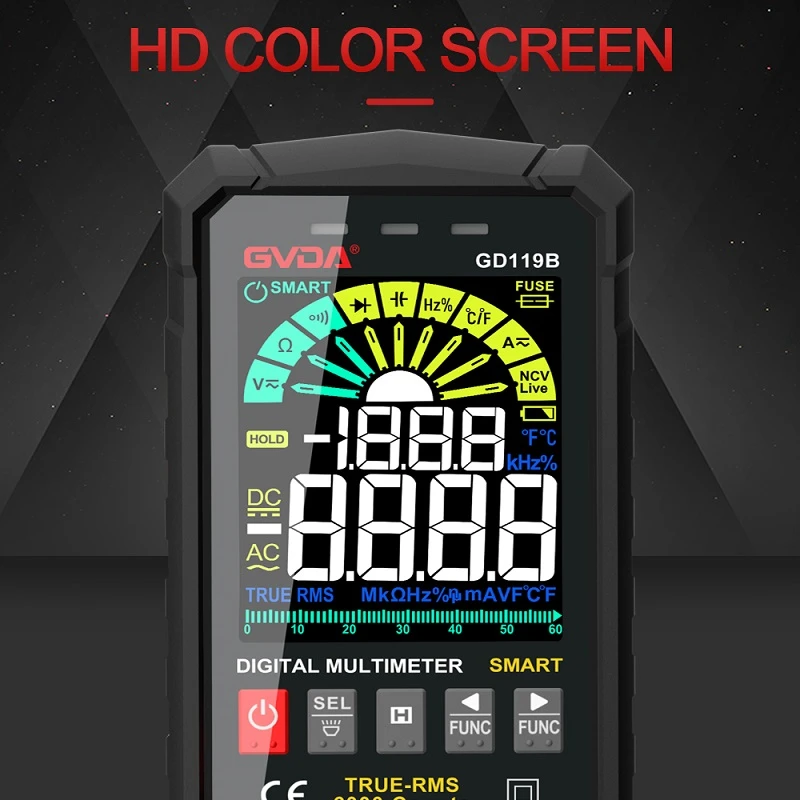
The flexible use of the multimeter is not only the basic use method!
1. There are two types of commonly used multimeters: pointer type and digital type:
The pointer multimeter is a multi-functional measuring instrument composed of a mechanical head as the core component. The measured value is read by the pointer on the head; Some voice prompts.
2. Divided by shape:
There are desktop, clamp form, handheld and pocket and so on.
3. Comparison of advantages and disadvantages:
The reading accuracy of the pointer multimeter is slightly worse than that of the digital multimeter, but the process of the pointer swing is more intuitive and obvious, and its swing speed and amplitude can sometimes objectively reflect the magnitude and direction of the measured value. The digital instrument has high sensitivity, high accuracy, clear display, strong overload capacity, easy to carry, and easier to use. There are many types of pointer multimeters, but the basic structure is similar. The structure of the pointer multimeter is mainly composed of three parts: the meter head, the changeover switch (also known as the selection switch), and the measurement circuit.
Meter head: It is the display device for measurement; the meter head of the multimeter is actually a sensitive galvanometer
Change-over switch: select the type and range (or magnification) of the electric quantity to be measured
Measuring circuit: convert the measured electricity of different nature and size into the DC current that the meter head can accept.
Precautions for using pointer multimeter
when using it:
(1) It must be placed horizontally to avoid errors.
(2) Do not collide with hard objects or drop to the ground.
(3) Do not touch the metal part of the test lead with your hands.
(4) When measuring a certain amount of electricity, it is not possible to change gears while measuring, especially when measuring high voltage, more attention should be paid. Otherwise, the multimeter will be destroyed. If you need to shift gears, you should disconnect the test leads first, and then measure after shifting gears.
Correct wiring:
1. Connect the red test lead to the “+” polarity jack, and the black test lead to the “—” or “*” or “COM” polarity jack.
2. When measuring DC flow, pay attention to the positive and negative polarity, so as not to reverse the pointer.
3. When measuring current, the meter should be connected in series in the circuit under test; when measuring voltage, the meter should be connected in parallel at both ends of the circuit under test.
4. When measuring transistors, keep in mind that the red test lead of the multimeter is connected to the negative pole of the battery in the meter; the black test lead is connected to the positive pole of the battery in the meter.
Correct choice of measuring gear
1. When measuring voltage, the transfer switch should be placed on the corresponding voltage gear; when measuring current, the corresponding current gear should be placed, etc.
2. When selecting the current or voltage range, it is better to make the pointer be at more than two-thirds of the scale; when selecting the resistance range, it is best to make the pointer be at the middle of the scale.
3. When measuring, if you are not sure about the range of the measured value, you should first turn the switch to the corresponding maximum range, and then gradually reduce it to the appropriate range according to the degree of deflection of the pointer.
After use:
(1) After using the multimeter, if there is no neutral position, the range switch should be set to the highest AC voltage position; if there is a neutral position ("*" or "OFF"), it should be set to this position.
(2) When the multimeter is not used for a long time, the battery in the meter should be taken out to prevent the battery electrolyte from leaking and corroding the internal circuit.