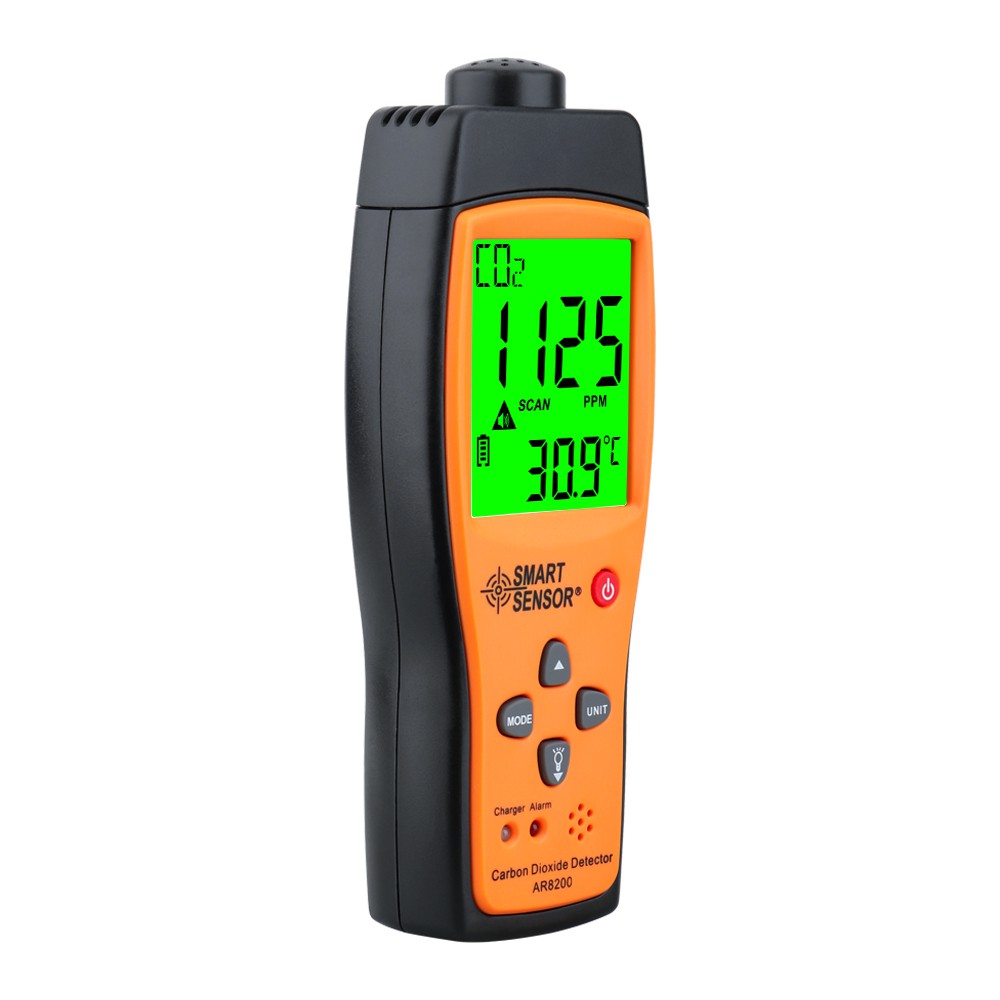
The importance of carbon dioxide detectors
Carbon dioxide is a common compound in the air. Its molecular formula is CO2. It is composed of two oxygen atoms and one carbon atom connected by a covalent bond. It is a colorless and odorless gas at room temperature. It is slightly larger than air and can be dissolved in water. and generate carbonic acid. When liquid carbon dioxide evaporates, it absorbs a large amount of heat and condenses into solid carbon dioxide, commonly known as dry ice. Carbon dioxide is thought to be the main source of the cause.
The main harm of carbon dioxide to the human body is to stimulate the human respiratory center, resulting in shortness of breath, increased smoke inhalation, and can cause symptoms such as headache and confusion.
The content of carbon dioxide in fresh air is about 0.03%. People living in this space will not be harmed, if there are many people gathered in the room, and the air is not circulated. Or there is gas, liquefied petroleum gas and coal stoves burning in the room, so that the oxygen content in the air is relatively reduced, and a large amount of carbon dioxide is produced, and the indoor personnel will appear poisoning symptoms to varying degrees. Regarding the maximum allowable content of carbon dioxide in indoor air, there is no unified regulation in various countries. Japan stipulates that the indoor air carbon dioxide content is 0.15% as the ventilation standard.
Determine the occasion of use: different types of gas detectors are selected for different industrial environments.
Fixed gas detector, which is a detector used more in industrial installations and production processes. It can be installed on a specific detection point to detect specific gas leaks. The fixed detector is generally a two-body type. The detection head composed of sensors and transmitters is installed on the detection site as a whole, and the secondary instrument composed of circuits, power supplies and display alarm devices is installed in a safe place as a whole, which is convenient for monitoring.
Because the portable instrument is easy to operate and small in size, it can be carried to different production sites. The electrochemical detector is powered by alkaline batteries and can be used continuously for 1000 hours; the new LEL detector, PID and composite instruments use rechargeable batteries (some have been Using non-memory nickel metal hydride or lithium-ion batteries), so that they can generally work continuously for nearly 12 hours, so, as this type of instrument, it is more and more widely used in various factories and health departments.