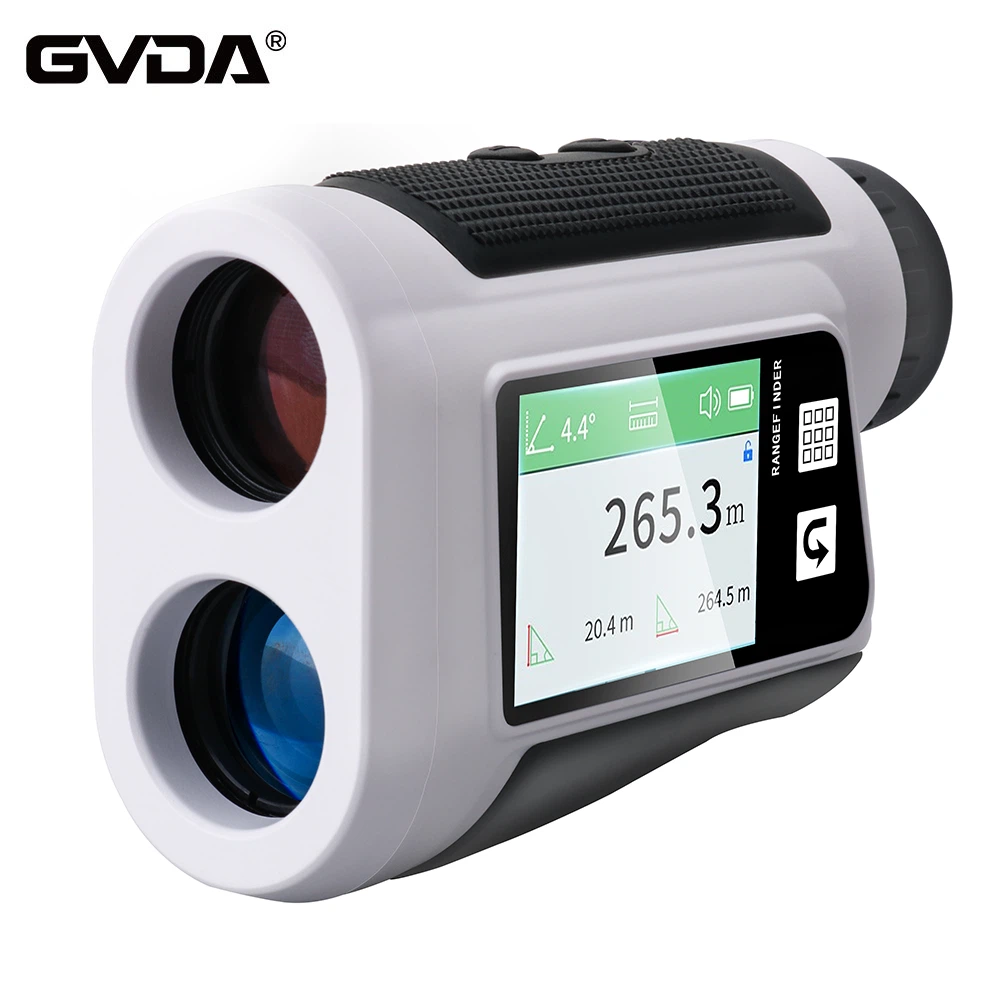
The principle and characteristics of the high-precision telescope handheld laser rangefinder
Laser range finders generally use two methods to measure distance: pulse method and phase method. The process of pulse method ranging is as follows: the range finder emits; the laser is reflected by the object to be measured and then received by the range finder, and the range finder records the time of the laser back and forth at the same time. Half of the product of the speed of light and the round-trip time is the distance between the rangefinder and the measured object. The accuracy of distance measurement by pulse method is generally around +/-1 meter. In addition, the measurement blind zone of this type of rangefinder is generally about 5-15 meters.
The instrument operates with semiconductor lasers at wavelengths of 905 nm and 1540 nm. For 905nm and 1540nm laser rangefinders, we call them "safe". YAG laser operating at a wavelength of 1064 nm. The wavelength of 1064 nanometers is harmful to human skin and eyes, especially if the eyes accidentally touch the laser with 1064 nanometers wavelength, the damage to the eyes may be fatal. Therefore, in foreign countries, the 1064 nanometer laser is completely banned in the handheld laser rangefinder. In China, some manufacturers also produce 1064nm laser range finders. As for the 1064nm laser range finder, because it is potentially harmful to the human body, we call it "unsafe".