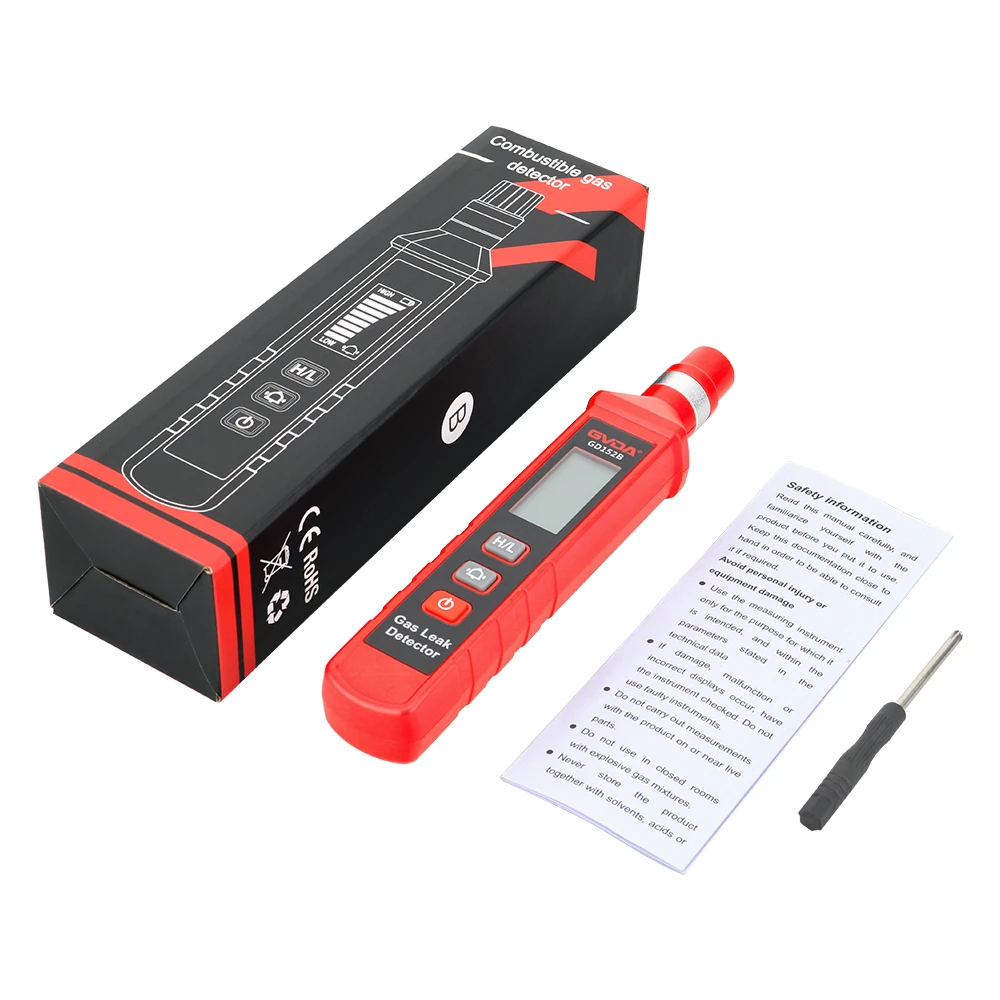
The principle and usage precautions of toxic and harmful gas detectors
Carbon monoxide detectors cannot detect CL2 gas, so before selecting a toxic gas detector, it is necessary to clarify which specific type of toxic gas is to be tested. The toxic gas detector can be selected as a pump suction or diffusion type based on its toxicity level. If the toxicity of toxic gases is very high and there is a danger for personnel entering, a pump suction toxic gas detector must be selected. If the toxicity of toxic gases is not very high and can exist in trace amounts, but long-term inhalation can also cause danger, a diffusion type toxic gas detector can be selected, such as in places where carbon monoxide is present.
Generally, for toxic and harmful gas detectors, we need to master the following points:
1. Pay attention to regular calibration and testing:
Toxic and harmful gas detectors, like other analytical and detection instruments, are measured using a relative comparison method: first, the instrument is calibrated with a zero gas and a standard concentration gas, and the standard curve is stored in the instrument. During the measurement, the instrument compares the electrical signal generated by the gas concentration to the electrical signal of the standard concentration, and calculates the accurate gas concentration value. Therefore, zeroing the instrument at any time and regularly calibrating the instrument are essential tasks to ensure accurate measurement. It should be noted that many gas detectors can currently replace their detection sensors, but this does not mean that a detector can be equipped with different detector probes at any time. At any time, when replacing the probe, in addition to requiring a certain amount of sensor activation time, the instrument must also be recalibrated. In addition, it is recommended to conduct response testing on the standard gas used in various instruments before use to ensure that the instruments truly play a protective role.
2. Pay attention to the concentration measurement range of the detection instrument: All types of toxic and harmful gas detectors have their fixed detection range. Only when the measurement is completed within its measurement range can it be guaranteed. Verify that the instrument accurately performs the measurement. If the measurement is carried out beyond the measurement range for a long time, it may cause significant damage to the sensor. For example, if an LEL detector is accidentally used in an environment exceeding 100% LEL, it may completely burn the sensor. Toxic gas detectors, when used at high concentrations for extended periods of time, can also cause damage. Therefore, if a fixed instrument emits an over limit signal during use, the measurement circuit should be immediately turned off to ensure the safety of the sensor.