The Solution to the Sensitivity Decrease of Coating Thickness Gauge Probe
Under normal circumstances, the host of the coating thickness gauge is not easy to break, and it can be used for a long time under normal use. However, the sensitivity of the probe will decrease after reaching a certain service life. Especially in the process of use, it is easy to reduce the sensitivity of the probe if it is not operated according to the specifications. After the sensitivity of the probe is reduced, zero calibration will not be possible, and there will be no display on the measurement host on the zero board. Another phenomenon is that it can be displayed on the zero plate with poor surface roughness, but it cannot be measured on the zero plate with good roughness. After this happens, it means that the probe has been damaged, but it can still be used. After the probe sensitivity is reduced, there are two ways to solve it
1. Put the probe on the edge of the zero plate for zero calibration. The middle of the zero plate cannot be measured. Generally, the edge of the zero plate can also be measured and displayed.
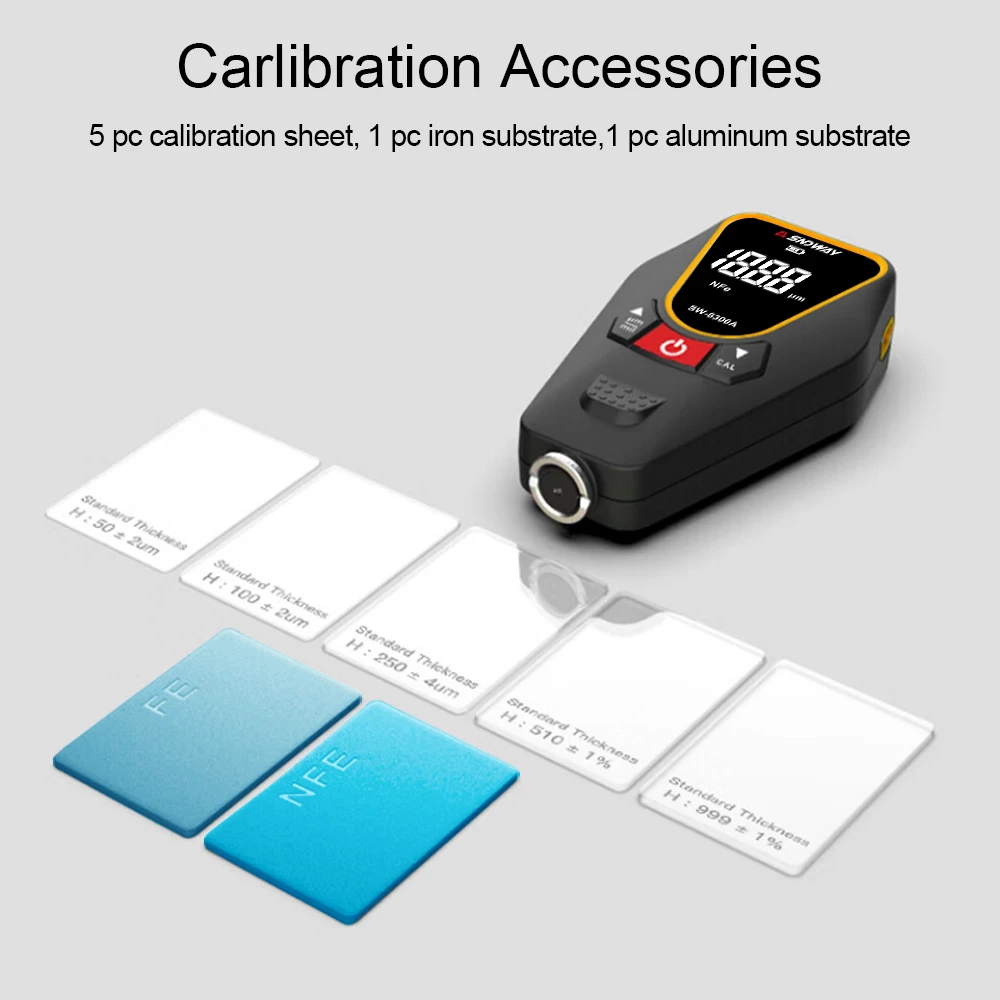
2. Choose a very thin diaphragm to measure to see how big the error of the reading is (take the average value), then remember this error, and subtract this error every time you measure in the future, it is an accurate reading.
Coating Thickness Gauge Overview
It can non-destructively measure the thickness of non-magnetic coatings (such as aluminum, chromium, copper, enamel, rubber, paint, etc.) on magnetic metal substrates (such as steel, iron, alloy and hard magnetic steel, etc.) , aluminum, zinc, tin, etc.) The coating thickness gauge has the characteristics of small measurement error, high reliability, good stability, and easy operation. It is an indispensable testing instrument for controlling and ensuring product quality. It is widely used in manufacturing, metal processing, chemical industry, Commodity inspection and other testing fields.
Ferrous/non-ferrous coating thickness gauges use magnetic sensors to measure non-ferromagnetic coatings and coatings on ferromagnetic metal substrates such as steel and iron, such as: paint, powder, plastic, rubber, synthetic materials, phosphating layer , chromium, zinc, lead, aluminum, tin, cadmium, porcelain, enamel, oxide layer, etc. Use eddy current sensors to measure enamel, rubber, paint, plastic layers, etc. on copper, aluminum, zinc, tin, etc. substrates. Widely used in manufacturing, metal processing, chemical industry, commodity inspection and other testing fields.