The structure and advantages of the thermometer
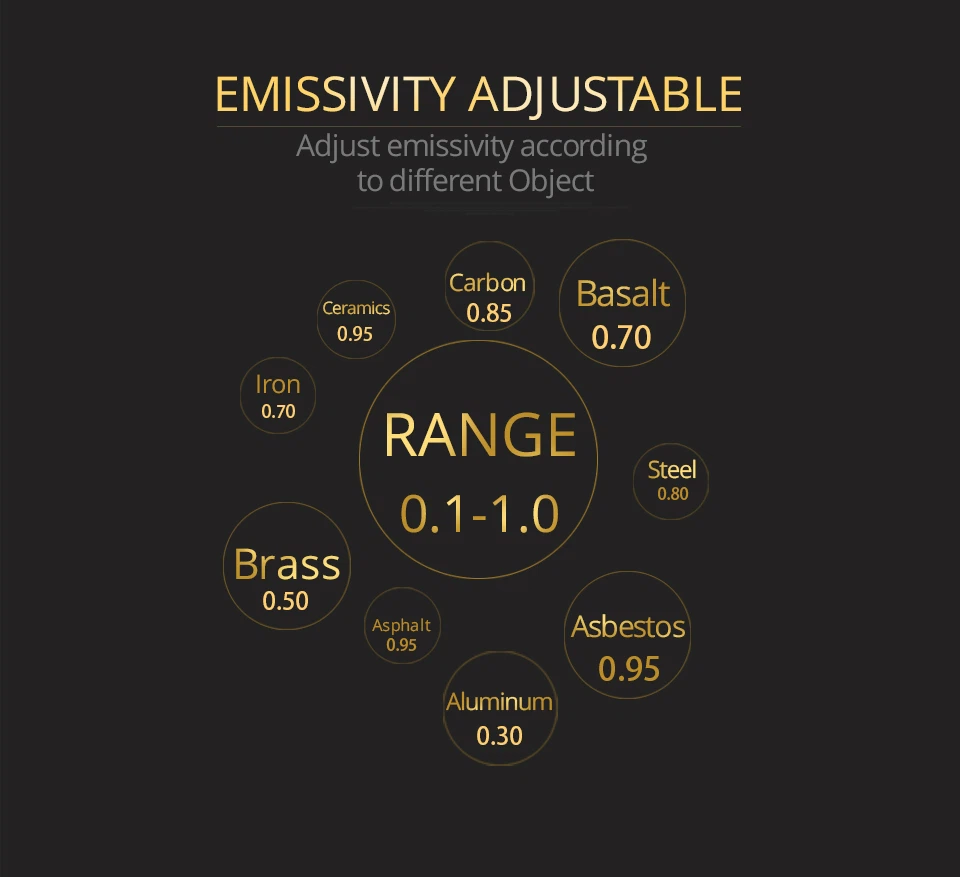
The structure and advantages of infrared thermometer. The infrared pyrometer focuses the infrared rays received from the measured object on the detector through the lens through the filter, and the detector generates a current or voltage signal proportional to the temperature through the integration of the radiation density of the measured object, which is then connected to In the electrical components, this temperature signal is linearized, corrected for the emissivity area, and converted into a standard output signal.
In principle, there are two types of portable pyrometers and fixed pyrometers. Therefore, when choosing a suitable infrared pyrometer for different measurement points, the main features are as follows:
1. Aimer
The collimator has this effect, and the measuring block or measuring point pointed by the pyrometer can be seen, and the collimator can often be used for large-area measured objects. For small objects and long measuring distances, sights with instrument panel scales or laser pointing points in the form of light-transmitting lenses are recommended.
2. Lens
The lens determines the measured point of the pyrometer. For large-area objects, a pyrometer with a fixed focal length is generally sufficient. But when the measurement distance is far from the focus point, the image at the edge of the measurement point will be unclear. For this reason, it is better to use a zoom lens. Within the given zoom range, the pyrometer can adjust the measurement distance. The latest pyrometer has a zoomable replaceable lens. The near lens and the far lens can be replaced without recalibration.
3. Sensors, i.e. spectral receivers
Temperature is inversely proportional to wavelength. At low object temperatures, sensors sensitive to long-wave spectral regions (hot-film sensors or pyroelectric sensors) are suitable, at high temperatures, short-wave sensitive sensors composed of germanium, silicon, indium-gallium, etc. will be used Photoelectric Sensors.