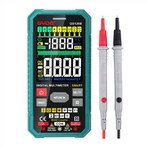
The structure of the digital multimeter and how to use it in detail
Multimeter, also known as multipurpose meter, multi-meter, triple meter, complicated meter, etc., is an indispensable measuring instrument in power electronics and other departments, generally to measure voltage, current and resistance as the main purpose.
Multimeter is divided into pointer multimeter and digital multimeter according to the display mode. It is a multifunctional, multi-range measuring instrument, generally the multimeter can measure DC current, DC voltage, AC current, AC voltage, resistance and audio level, etc. Some can also measure AC current, capacitance, inductance and some parameters of semiconductors (e.g., β), etc. The multimeter is a kind of measuring instrument with a rectifier, which can be used for the measurement of voltage and resistance.
Multimeter is a kind of magneto-electric instrument with rectifier, which can measure various electrical parameters such as AC and DC current, voltage and resistance. For each electrical quantity, there are generally several ranges.
Also known as a multi-meter or simply multi-meter. A multimeter consists of a magneto-electric ammeter (head), a measurement circuit, and a selector switch. By changing the selector switch, a variety of electrical parameters can be easily measured. The main basis for circuit calculations is Ohm's law for closed circuits. There are many types of multimeters, which should be selected according to different requirements.
Multimeter to MF30 type pointer multimeter and DT840 type digital multimeter as an example, to understand its structure and performance, learn to use the multimeter to correctly measure the voltage, current, resistance and other basic power methods, familiar with the use of precautions.
1. Structure of Pointer Multimeter
Mainly by the head, measuring line, switch three parts.
The use of pointer multimeter, the main attention to the following points:
(1) Before use, the pointer of the meter head should be zeroed.
(2) Before measurement, the change-over switch should be dialled to a suitable position according to the item and size of the measured power.
(3) Measurement is complete, the transfer switch should be dialled to the highest AC voltage file, some multimeter (such as 500 type) should be dialled to the transfer switch marked "..." The empty position.
2, AC voltage measurement
(1) Before measurement, switch to the corresponding AC voltage range. If you do not know the size of the measured voltage, the range should be placed in the highest level to avoid damage to the meter head.
(2) When measuring, connect the meter pens in parallel to the measured circuit or the measured components. It is strictly prohibited to toggle the change-over switch to select the range during the measurement.
(3) When measuring voltage, get into the habit of one-handed operation and concentrate your attention highly.
(4) As the AC voltage scale on the dial is calibrated according to sinusoidal AC, if the measured quantity is not sinusoidal, the error will be larger.
(5) The frequency range of measurable AC voltage is generally 45HZ ∽ 1000HZ, if more than the range, the error will increase.
3 DC voltage measurement
Measurement methods and AC voltage is basically the same, but pay attention to the following two points:
(1) with the measurement of AC voltage, measurement before the transfer switch to the DC voltage gear, in the case of the measured voltage is not clear in advance, the range should not be small; measurement, the pen should be connected in parallel with the measured circuit, the measurement is not allowed to toggle the transfer switch.
(2) When measuring, the positive and negative polarity of the meter pens must be noted. The red pen is connected to the high potential end of the circuit being measured, and the black pen is connected to the low potential end. If the meter pen is connected to the opposite, the pointer of the meter head will fight back, and it is easy to bend the pointer. If you don't know the potential of the measured point is high or low, you can gently try to touch the measured point with the meter pen. If the pointer reverse bias, the polarity of the pen is reversed, exchange the pen can be.
4. Measurement of DC current
(1) Measurement, the multimeter must be in series with the measured circuit, not in parallel.
(2) must pay attention to the positive and negative polarity of the pen. Measurement, the red pen connected to the circuit break high potential end, the black pen connected to the low potential end.
(3) In the absence of the size of the measured current, the range should be large rather than small. It is strictly prohibited to toggle the changeover switch to select the range in the measurement.