The two most practical methods of using a multimeter to troubleshoot circuit faults
1, Voltage measurement method.
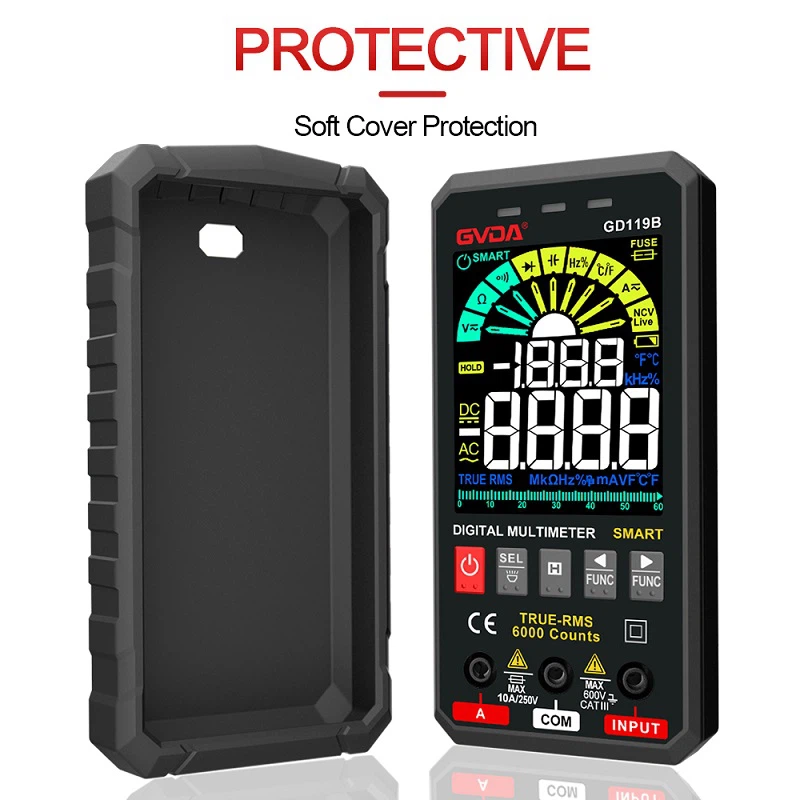
Firstly, power on the control circuit and adjust the multimeter gear switch to AC voltage level 750V. Referring to the circuit schematic, one probe of the multimeter remains on line 9, while the other probe measures lines 8-7-6-5-4-3. When the switch is not closed, the two probes are in phase and the voltage is 0V. When measuring lines 2-1, the two probes are in different phases and the voltage is around 380V. This is the normal state of the circuit. If the voltage value of any line or point does not match the circuit schematic during the measurement process, in most cases, the point with the wrong voltage value is the fault point!
2, Resistance measurement method.
Firstly, the circuit needs to be powered off, tested, and confirmed to be dead. Then, the multimeter gear switch should be set to the beep or resistance mode, and the two multimeter probes should be placed on lines 1 and 9 respectively. Under normal circumstances, press the SB1 or SB2 button separately, or manually press the two AC contactor springs separately (i.e. manually close the normally open point of KM1 or KM2). At this time, 1-9 are conductive, the circuit is open, and the multimeter will have the corresponding coil resistance. If there is no resistance value, it indicates that the circuit is not connected. It is necessary to compare the circuit schematic and measure and analyze the continuity point by point. The measurement method is similar to voltage.
3, The resistance measurement method and voltage measurement method of a multimeter are the two most commonly used methods in circuit fault diagnosis. It can be said that each has its own advantages and convenience. The key is which method you habitually use, and use the multimeter to measure with the help of your most familiar method.
Method for finding electrical control circuit faults with a multimeter
There are generally two methods for finding circuit faults: voltage method and resistance method. The voltage method uses voltage measurement to detect fault points, while the resistance method uses resistance measurement to locate faults. They each have their own advantages. If you are not familiar with the circuit, we recommend using the resistance method to determine the fault, which is relatively safe.
The main circuit has fewer wires, making it easier to diagnose faults. Here, we will take the control circuit as an example.