The use of the most common functions in multimeters
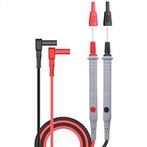
1. Measure AC voltage: Set the multimeter to AC 600V gear (some are 750V gear), then insert the multimeter's pen into the family socket, then the multimeter display will show the measured voltage value.
2. DC voltage test: take a new 1.5V battery as an example, adjust the multimeter to DC voltage gear, then connect the red pen to the positive terminal of the battery and the black terminal to the negative terminal of the battery, and you can see that the multimeter shows 1.5V.
3. Measure the resistance of the multimeter gear to 200 ohms resistance gear, and then the pen will be contacted to the need to measure the resistance of the two ends, and then the screen will display the resistance value of the measured resistance
4. Pass measurement: the multimeter will be adjusted to the buzzer file two pens lap together, or lap to the cable we need to test the ends, if the cable is through the buzzer will ring, otherwise it does not work!
Multimeter use must pay attention to a few notes:
1. Measurement first look at the block, do not look not measure
Each time you pick up the pen ready to measure, be sure to check the measurement category and range selector switch is dialled to the right position. In order to be safe, must develop this habit.
2. Measure without dialling, and dialling neutral after measurement.
Measurement can not be arbitrary toggle selector knob, especially when measuring high voltage (such as 220V) or high current (such as 0.5A), so as to avoid generating an arc, burn switch contacts. Measurement is complete, the range selector switch should be dialled to the "-" position.
3. Measurement R is not charged, measurement C first discharge
It is strictly prohibited to measure the resistance in the case of the measured circuit with a point. When checking large-capacity capacitors on electrical equipment, the capacitor should be short-circuited and discharged before measurement.
4. Measure I should be connected in series and U should be connected in parallel.
When measuring current, the multimeter should be connected in series in the circuit to be measured; when measuring voltage, the multimeter should be connected in parallel at both ends of the circuit to be measured.
5. Don't reverse the polarity, and make it a habit to use one hand.
When measuring current and voltage, you should pay special attention to the polarity of the red and black pens should not be reversed, and you must develop the habit of one-handed operation to ensure safety.