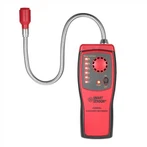
These beginner tips for gas detectors
Gas detection is ubiquitous. It may exist in the garage where you park your car, in an airplane, or even in a casino. Gas detection equipment is more commonly used than you initially thought. We will help you start gas detection. In the early days of gas detection, it can be traced back to 1750 when canaries were used to detect dangerous and harmful gases for miners mining coal. Fortunately for us (and the canary), technology is constantly evolving and sensors are designed to detect almost all gases that may be exposed to us. Some of these technologies involve but are not limited to infrared and photoionization detection. But how to start using gas detection. We provide you with ten initiators for gas detection.
1: Only use filters produced by the manufacturer
Filters can protect the interior of gas detection equipment from dust, liquids, and other harmful substances that may damage the gas detection instrument. If the correct filter is not used, the gas detector may require faster or more frequent maintenance compared to using the correct filter.
2: If possible, test your pump function
If the pump is restricted, the pumped detector cannot fully extract the sample. Before using the monitor, place your finger on the inlet to test the pump's function. If pump stall is triggered, the pump should be in good operating condition.
3: Do not expose the LEL sensor to toxic gas
Firstly, LEL? We use two units to measure the gas detection results. Ppm and LEL. LEL represents the lower explosive limit, which is the percentage of the compound's atomic% (vol) content. 100% LEL is the minimum concentration at which flammable substances can cause combustion or explosion when ignited. Compounds containing organic silicon, lead, or sulfur can kill LEL sensor responses quite quickly. If you suspect that the gas detector has been exposed to any toxins, please replace the filter and check the functionality of the LEL sensor. If you decide to clean the gas detector, you should use a damp cloth to wipe and skip the solvent, as these solvents may also contain sensor toxins.
LEL represents the lower explosive limit, which is the percentage of the compound's atomic% (vol) content.
4: Collision test for each use
If you conduct a collision test on the gas detector before each use, the calibration frequency can be extended to 3 to 6 months when the gas detector successfully passes the collision test. Bump testing means keeping the gas detector at the level of the calibration gas, which is just enough to cause it to alarm. Using this method can only ensure the functionality of the sensor. In order to conduct collision testing, it is necessary to calibrate the gas. Collision test to check if the gas detector is working properly.
5: Regularly calibrate gas detectors
Starting from calibrating the new gas detector once a week. If there is little or no need to make adjustments after a few weeks, reduce the calibration frequency to a level where only a small amount of changes are needed for calibration. Finally, the calibration frequency will end between 1 and 3 months.
6: Perform fresh air calibration only in fresh air
The error that often leads to incorrect readings is poor calibration of fresh air. Managing fresh air calibration in production lines or garages with toxic gases or flammable materials may result in negative readings. If you are unable to obtain fresh air, please use a zero air calibration bottle.
7: Do not use expired calibration gas
Calibration gas detectors need to be calibrated using calibration gases that have not exceeded their expiration date (for more information on calibration gases and their expiration dates). Calibration of gas detectors using expired calibration gases may lead to improper calibration and may result in incorrect identification of the instrument in good working condition. Fault calibration may ultimately lead to unsafe working conditions.
8: Replace gas detector sensors on time
The common types of sensors used in gas detectors are electrochemical sensors, catalytic sensors, photoionization (PID) sensors, infrared sensors, current sensors, and semiconductor sensors. It is very important to keep the equipment up-to-date. If the old sensors expire, they need to be replaced with new sensors. (More information about gas detector sensors and which sensors are used in gas detectors)
9: Routine work
When using a gas detector regularly, it becomes a routine. Before proper use, you will systematically follow the steps to be taken, such as collision testing, fresh air testing, calibration, or ultimately contact an authorized repair station for annual maintenance of the gas detector.
10: What does using a gas detector mean
It may sound simple, but sometimes it seems difficult. Use gas detector as expected. Please keep the instrument properly and do not leave it idle on the shelf. Finally, gas detectors can save lives. This is how you start gas detection