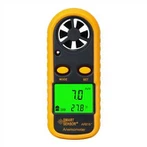
Traditional moisture measurement methods are replaced by moisture meters.
Humans have explored the creation of instruments and meters throughout history, from simple manual instruments to cutting-edge scientific instruments. Object moisture content measurement techniques are also always being improved. It appears that a moisture meter didn't exist in the beginning. Initial moisture is measured by drying, and subsequent measurements are made using the weight loss method's formula: Weight of the object before weight loss minus weight of the object after weight reduction equals moisture content. The moisture content is manually determined, This approach produces extremely imprecise water content calculations, and many circumstances can readily impact the test findings, leading to unstable measurement data.
Digital moisture analyzers based on A/D (digital/analog conversion) linkages grew quickly after the middle of the 20th century, driven by industrial technical progress, with the introduction of automated control theory and the maturation of automatic control technology. Moisture measuring devices are becoming intelligent, digital, and automated as a result of the quick development of computers, communications, software, new materials, and new technologies as well as the potential for mature artificial intelligence and online measurement. In recent years, moisture meters have become commonplace and have been utilized extensively across several industries. The use of conventional moisture analyzers and moisture measuring techniques with significant measurement errors is being phased out.
The moisture meter is broadly applicable to all businesses that require quick moisture measurements, including those in the pharmaceutical, grain, feed, seed, rapeseed, dehydrated vegetable, tobacco, chemical, tea, food, and meat industries, as well as in the agricultural, forestry, paper, rubber, and plastic industries. It can simultaneously satisfy the requirements for determining the moisture content of solids, granules, powders, colloid, and liquids in the laboratory and during production in the textile and other sectors.
The titration results of the moisture meter can be input and output in accordance with specific required formats, and the moisture meter can automatically perform pertinent statistics and analysis, so that our moisture meter can be timely. These factors should be considered when using the moisture meter. The titration speed should be quick and precise when using the rapid moisture analyzer because it has many factors to consider while using it in addition to its technical aspects in order to obtain useful results.
The moisture meter should try to avoid direct sunlight, vibration, etc. It is best not to have temperature interference and power fluctuations. There should be enough space around the instrument for heat dissipation to avoid inaccurate measurements caused by heat sources gathering. It should be kept The distance between the instrument and the substance being tested. During use, it should be noted that the vent of the instrument cannot be covered or stuffed with other items, which is very dangerous. When starting to heat, do not place those flammable items around the instrument, so as not to cause harm to the operator. . In addition, the weight of the material sample to be measured should be as small as possible, which will help the accuracy of the test results.