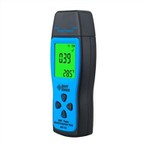
Transformer Clamp Ammeter Construction and Operation
The clamp meter, a portable device that can measure an AC current in a circuit without cutting it off, is an instrument that combines an ammeter with a current transformer. It is an essential component of a digital multimeter.
Arrangement and idea
A current transformer, a clamp wrench, and a rectifying magnetoelectric system with a reaction force instrument make up the clamp meter's basic components.
The operation of a clamp meter is similar to that of a transformer. The primary coil of a step-up transformer is the wire that travels through the clamp-type iron core; it is analogous to the primary coil of a 1-turn transformer. The secondary loop is made up of the secondary coil and the ammeter for measurement. An alternating magnetic field is created when an alternating current flows through a wire, and an induced current is produced in the secondary circuit as a result. The inverse ratio of the turns of the primary and secondary coils is equivalent to the ratio of the current's magnitude to the primary current.To measure substantial currents, one uses a clamp ammeter. If the measured current is insufficient, the primary wire can be run through the clamp meter to add turns while also dividing the current by the number of turns.
The clamp ammeter's feedthrough current transformer's primary winding is the measured wire that travels through the transformer's center, and the secondary winding is wound on an iron core and connected to the clamp ammeter's AC ammeter. The wrench's job is to open and close the moveable section of the through-type transformer's core so that it may clamp the wire being tested. The knob is essentially a range selection switch.
When measuring current, tighten the wrench, widen the jaws, and insert the wire being tested into the feed-through current transformer's center. The electromagnetic ammeter's side winding induces a current that flows through the coil, deflecting the pointer and displaying the measured current value on the dial scale.
When inserting the test wire into the window via the core button, take attention to how well the jaws fit together on each side and avoid allowing any other objects to obstruct the opening;
The clamp meter's minimum range is 5A, thus measuring a tiny current will result in a bigger display error. This outcome can be calculated by winding the energized wire on the clamp meter for a number of weeks, dividing the reading value acquired by the number of turns, and adding the results together.