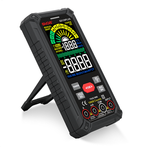
Use of the sound level meter and safety measures
1. Check the calibration of the sound level meter with a sound calibrator
2. Set the range switch to an appropriate position according to the size of the sound to be measured. If the size cannot be estimated, set it to "85-130"
3. Set the time weighting switch to the position specified in the standard; when the sound level is relatively stable, set it to "F" (fast); if the sound level changes sharply, set it to "S" (slow) 4. Set the reading sign switch to "5S" or "3S"
5. Put the power switch on "on"; when the instrument starts to work, it will display numbers
6. If the over-quantity mark "▲" (under-quantity mark "▼") is displayed on the right end of the display, the range switch should be moved up "or down" to make the range mark disappear. If the range mark cannot disappear, the measured sound level exceeds the measurement range of the instrument.
7. After adjusting the range of the sound level meter, you can read the measurement results from the display.
8. Make measurement records
9. After the measurement is completed, it is recommended to check the sensitivity of the sound level meter with a sound calibrator to ensure the accuracy and reliability of the measurement data.
10. Set the power switch to "OFF". If the instrument will not be used for a long time, be sure to take out the battery.
3. Matters needing attention in the use of sound level meter
1. When measuring, the instrument should select the correct gear according to the situation. Hold both sides of the sound level meter flat with both hands, and the microphone points to the sound source to be measured. Extension cables and extension rods can also be used to reduce the impact of the appearance of the sound level meter and the human body on the measurement. The use position of the sound level meter shall be determined according to relevant regulations.
2. The sound level meter is powered by batteries. Check whether the battery voltage meets the requirements: the function switch of the meter is set to "battery" and the "attenuator" can be set arbitrarily. At this time, the indication on the meter should be within the rated battery voltage range, otherwise the battery needs to be replaced. Pay attention to the polarity when installing the battery or external power supply, and do not reverse the connection. The battery should be removed when not in use for a long time, so as not to damage the instrument due to leakage.
3. Read the instruction manual before use to understand the use method and precautions of the instrument. Preheat according to the preheating time specified in the instruction manual of the sound level meter (for example, 10 minutes).
4. When the voltage of the battery used by the sound level meter is insufficient, it should be replaced.
5. Calibrate the amplifier gain: set the function switch of the meter to "0" and set the "attenuator" switch to "calibration". At this time, the pointer of the meter should be at the red line position, otherwise the sensitivity potentiometer needs to be adjusted.
6. When the measured sound level is not known, the "attenuator" must be placed at the maximum attenuation position (for example, 120dB), and then gradually adjusted to the attenuation position required by the measured sound level during measurement, so as to prevent the measured sound level from exceeding the range and damaging the sound level meter
7. Do not disassemble the microphone, prevent it from being thrown, and place it properly when not in use. 8. The sensor is an extremely delicate and easily damaged relatively expensive part, so handle it with care during the entire experiment. After the experiment, remove the sensor and put it in the designated place.
9. The instrument should not be placed in a place with high temperature, humidity, sewage, dust, air or chemical gas with high content of hydrochloric acid and alkali.
10. Do not disassemble the instrument without authorization. If the instrument is abnormal, it can be sent to the repair unit or the factory for inspection.