Uses and functions of metallurgical microscope
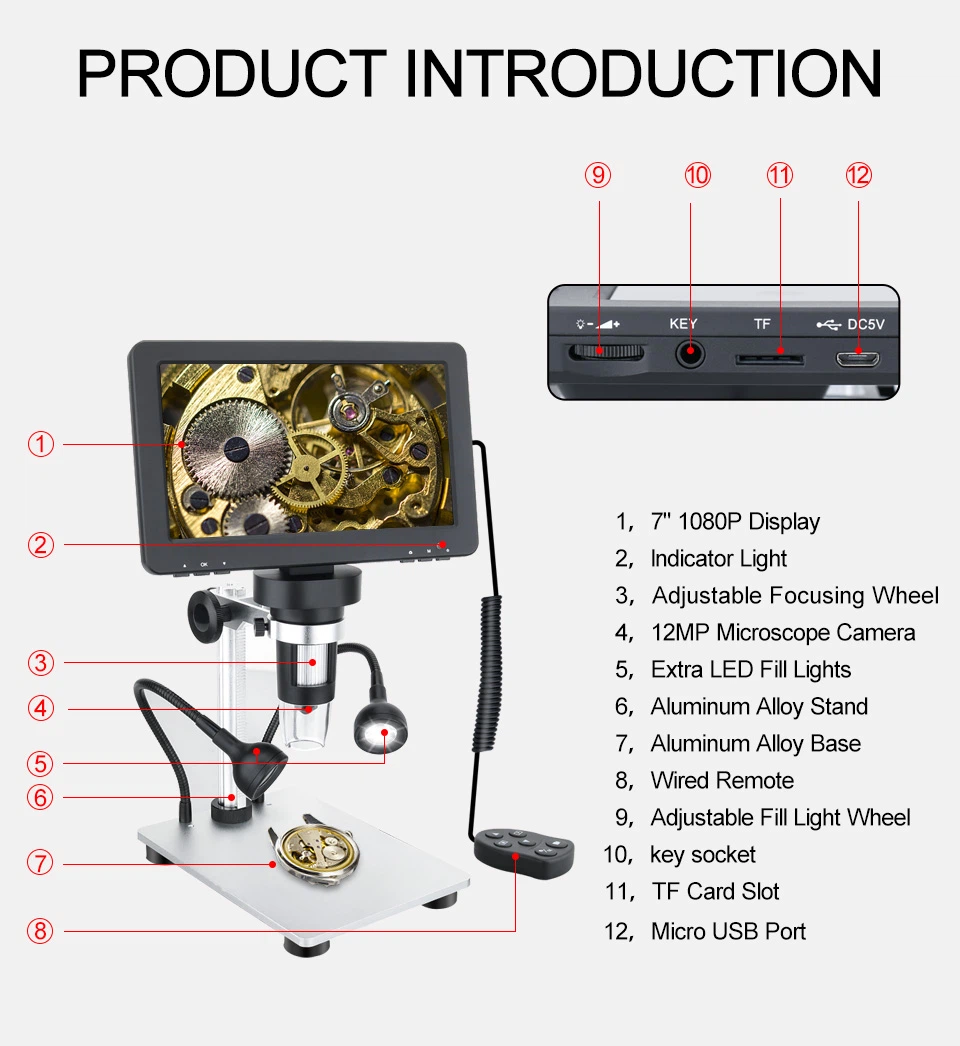
Metallographic microscope is mainly a professional instrument used to observe the metallographic organisation, it is specially used to observe the metallographic organisation of opaque objects such as metals and minerals in a microscope. These opaque objects can not be observed in the ordinary transmitted light microscope, so the main difference between metallographic and ordinary microscopes is that the former to reflect light, while the latter to transmitted light illumination. Metallographic microscope has the characteristics of good stability, clear imaging, high resolution, large and flat field of view. With measurement mode and comparison mode, and optional metallographic analysis software for metallographic analysis, the main uses of metallographic analysis software are as follows:
1,Drawing--It is easy to observe the metallographic image on the computer monitor and analyse the metallographic profile, rating and so on. Combined with the optical image measurement system, the workpiece for high ** degree of optical measurement, and can be exported in EXCEL, WORD, TXT format to do data analysis, and can be exported in DFX format in CAD for the design of engineering drawings.
2,Measurement - can measure the size of any geometric figure on the plane (angle, length, diameter, radius, the distance from the point to the line, the eccentricity of the circle, the distance between the two circles, etc.)
3, marking - in the real-time image of the actual workpiece can be marked on a variety of geometric dimensions.
4,Photo - can take a photo of the actual object, including the size of the marked.
5, graphics output to AutoCAD - according to the real-time image of the shape of the actual workpiece depicted in the output to AutoCAD as a standard engineering drawings.
6, JPEG image input: you can enter a pre-snapshot of the JPEG image and real-time image of the workpiece for comparison.
7,Output to AutoCAD automatic alignment: you can according to the real-time image of the actual shape of the workpiece depicted in the graphics according to the actual need to set up their own benchmarks and in the transmission process of the alignment of the graphics.
8, AutoCAD standard engineering drawings input: AutoCAD standard engineering drawings can be input directly into the real-time image and the actual workpiece overlap and comparison, so as to find out the difference between the workpiece and engineering drawings.
9, bird's-eye view: you can observe the full graph of the workpiece and have a zoom function similar to AutoCAD.
10, in the bird's-eye view of the mark: you can mark the dimensions in the bird's-eye view of the whole picture.
11, direct input circle, line segment: can be required to enter the standard circle or line (customers define their own circle, line size, length and coordinate position). Then compare the standard circle or line with the real thing in the image, so as to find the error of the workpiece.
12,Input line in polar coordinates: You can input standard line segments in polar coordinates according to customers' needs.
13,Self-set customer coordinates: According to the customer's own needs, you can set your own coordinates on the real-time image of the origin (0, 0).
14,Coordinate Marking: Take the coordinate origin (0,0) set by yourself as the base, mark the coordinate position of any point in the real-time image.
15, capture the intersection: you can automatically capture the intersection of the two lines.