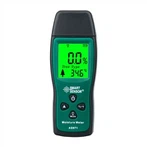
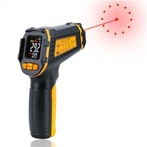
What are the coating thickness gauge's daily maintenance and maintenance procedures?
We all know that the coating thickness gauge is a precision instrument. To ensure that the coating thickness measured by it is correct, then to ensure that the coating thickness gauge can be in good working condition at any time, daily maintenance and maintenance are necessary. indispensable. The agent expert of Elcometer coating thickness gauge will briefly introduce how to maintain and maintain the coating thickness gauge.
First of all, keep the coating thickness gauge clean, pay attention to heat and moisture, and prevent contact with corrosive liquids or gases, and it is strictly forbidden to pull the probe line and shake it randomly during use. For coating thickness gauges that are not used for a long time, pay attention to take out the battery to avoid damage to the instrument caused by battery corruption. Secondly, when loading the battery, it is necessary to confirm whether the positive and negative terminals of the battery are in good contact, whether the voltage is normal, and pay attention to using the correct method when measuring. Finally, if the coating thickness gauge breaks down, it is not easy to disassemble it privately, and it should be sent back to the manufacturer or a professional maintenance organization for maintenance in time.
The difference between coating thickness gauge and ultrasonic thickness gauge
What is the difference between a coating thickness gauge and an ultrasonic thickness gauge? In fact, in our daily use, we usually do not deliberately distinguish them, because coating thickness gauges and ultrasonic thickness gauges are two types of thickness gauges that are both different and related. If you want to understand coating thickness measurement The relationship between the ultrasonic thickness gauge and the ultrasonic thickness gauge is mainly introduced from the concept and measurement range.
There are two main types of ultrasonic thickness gauges: the first category of ultrasonic thickness gauges has a measurement range of 0-400mm, and the measurement ranges of different brands and models of ultrasonic thickness gauges will be different, but we do not worry about this, so we provide the above An approximate range; the measurement range of another type of ultrasonic thickness gauge is 0-1500μm, which is also an approximate measurement range as above. From the above two measurement ranges, we can see that ultrasonic thickness gauges can be divided into two types of measurement products.
Coating Thickness Gauge
Generally speaking, the ultrasonic thickness gauge is only the first type of thickness gauge, and the second type of ultrasonic thickness gauge is often referred to by many people as the coating thickness gauge, because only the thickness measurement range of the coating is measured in μm. Metrological, that is, the measuring range of the coating thickness gauge is 0-1500μm. For the coating thickness gauge, it is not only the ultrasonic measurement method, but also the coating thickness gauge such as the magnetic thickness measurement method; the coating thickness gauge of the eddy current thickness measurement method; the coating thickness measurement method of the radiation thickness measurement method instrument.
According to the above description, the best expression for the coating thickness gauge using the ultrasonic thickness measurement method should be the ultrasonic coating thickness gauge, and the name of the ultrasonic thickness gauge whose measurement is in mm can remain unchanged. However, the ultrasonic thickness gauge produced by some manufacturers can switch between the above two measurement range modes. Therefore, the coating thickness gauge and the ultrasonic thickness gauge are two types of thickness gauges that are different and related.
So, what are the differences between coating thickness gauges and ultrasonic thickness gauges? (Remarks: The following only compares the ultrasonic coating thickness gauge with the ultrasonic thickness gauge)
1. The measurement range of the ultrasonic thickness gauge is larger than that of the coating thickness gauge.
2. The measurement accuracy of the coating thickness gauge is better than that of the ultrasonic thickness gauge.
3. The measurement application objects of ultrasonic thickness gauge and coating thickness gauge will be different.
What is the connection between the coating thickness gauge and the ultrasonic thickness gauge? (Remarks: The following only compares the ultrasonic coating thickness gauge with the ultrasonic thickness gauge)
1. Ultrasonic coating thickness gauge and ultrasonic thickness gauge are both instruments that use the working principle of ultrasound.
2. Some ultrasonic thickness gauge measurement modes can be switched to coating thickness gauge measurement.
3. The measurement methods of ultrasonic thickness gauge and coating thickness gauge are basically the same.
To sum up: the coating thickness gauge and the ultrasonic thickness gauge are indeed two different instruments for measuring thickness, but for the coating thickness gauge and the ultrasonic thickness gauge, which both use ultrasonic measurement, they are existing difference and connection. We don’t need to distinguish them specifically in our daily life. If we want to distinguish them, it is mainly from the range of measurement. For example, to measure objects with a thickness of less than 2mm, we usually need a coating thickness gauge for measurement.