What are the different types of night vision goggles available?
Spotting Scopes - Spotting scopes are generally hand-held and can also be mounted on a weapon, they utilize a monocular (one eye) body. Since spotting scopes are handheld devices and are not worn on the body like eyepieces, they are better suited when you want to take a more detailed look at a specific target and then return to normal observing conditions.
Eyepieces - Although eyepieces can also be handheld, they are usually worn on the forehead. Eyepieces have a binocular (two-eye) body, with either a single or compound lens, depending on the style. Eyepieces are perfect for extended observation (e.g. when patrolling around poorly lit buildings).
Night Vision Cameras
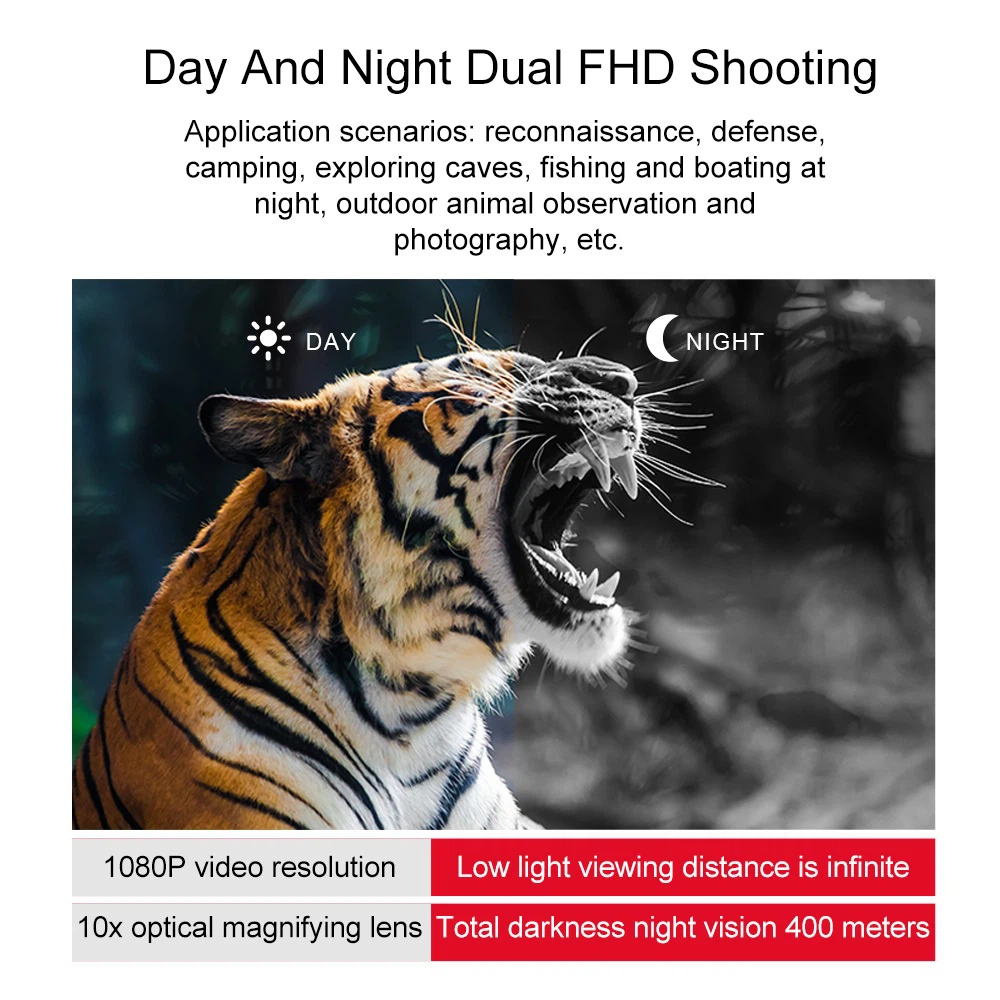
Cameras - Cameras with night vision technology can transmit images to a monitor for instant playback, or a video recorder can be used to record the incoming images. Cameras come in handy when we need high quality night vision observations at a constant location, such as on a fixed building, or when fitting night vision devices as on-board equipment for helicopters. Many newer cameras already have built-in night vision capabilities.
Infrared night vision cameras are categorized as active or passive, what is the difference between the two?
Active night vision system: is the use of near-infrared light as a light source for lighting targets, such as infrared LEDs, infrared lamps and near-infrared lasers, etc.; with a low-light camera or low-light camera to receive the target reflected infrared light, converted into video signals in the monitor fluorescent screen to synchronize the display image, this night vision device is called the active infrared night vision device.
Passive night vision system: there are two types, one is the use of moonlight, starlight, night sky light and all the very weak natural light, to amplify the enhancement to achieve the purpose of visualization, this type of night vision device is also known as microlight night vision device. The other type is the use of far-infrared sensitive detectors to detect the target's own thermal radiation, this type of night-vision device is also known as thermal imaging camera.