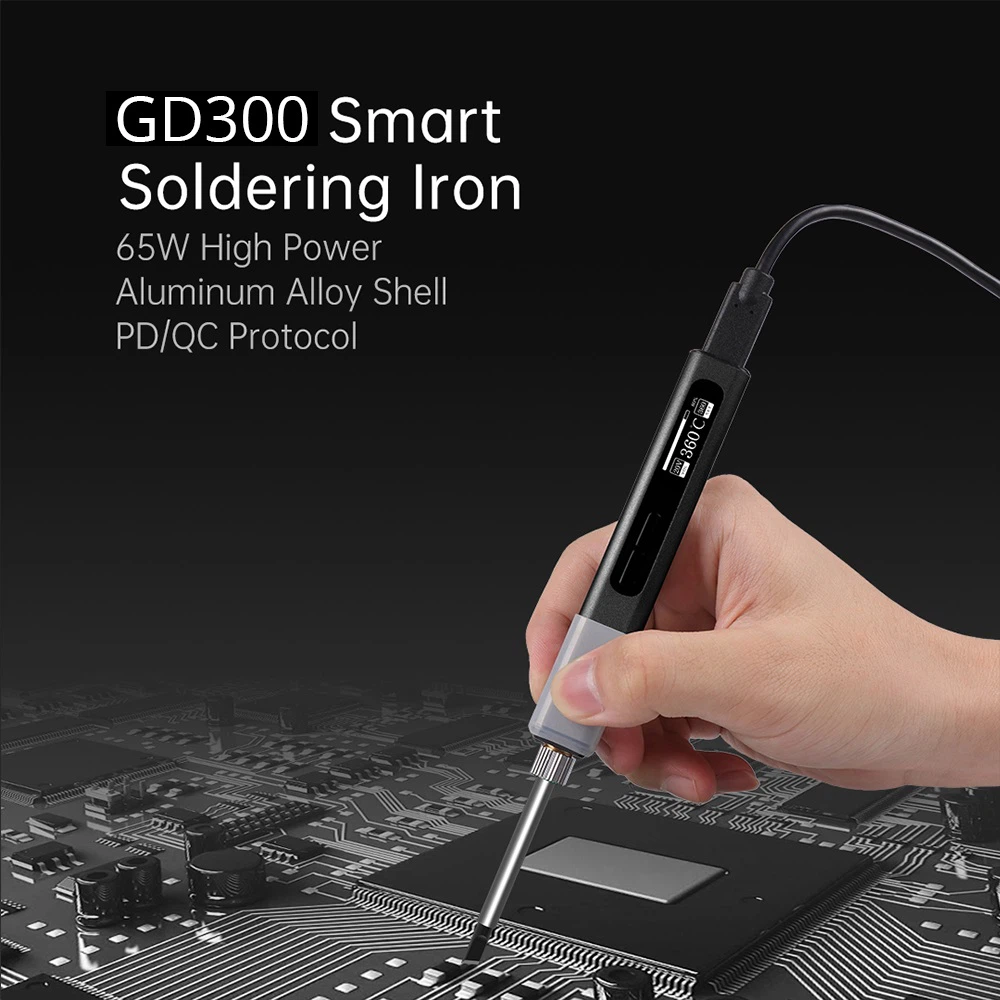
What Are the Principles for Selecting an Electric Soldering Iron
1. The shape of the soldering iron tip can adapt to the surface requirements of the workpiece and the assembly density of the product.
2. The top temperature of the soldering iron tip needs to be adapted to the melting point of the solder, generally 30-80 ℃ higher than the melting point of the solder (excluding the temperature drop when the soldering iron tip contacts the soldering point).
3. The heat capacity of an electric soldering iron should be appropriate, and the temperature recovery time of the soldering iron tip should be adapted to the requirements of the surface of the workpiece being soldered.
The temperature recovery time refers to the time required for the temperature at the tip of the soldering iron to decrease due to heat dissipation during the welding cycle and then recover to the highest temperature. It is related to the power and heat capacity of the soldering iron, as well as the shape and length of the soldering iron tip.
Principle of power selection for electric soldering iron
1. When soldering integrated circuits, transistors, and other heat sensitive components, consider using a 20W internal heating or 25W external heating soldering iron.
2. When welding thicker wires and coaxial cables, consider using a 50W internal heating or 45-75W external heating soldering iron.
3. When welding larger components, such as metal chassis grounding pads, a soldering iron with a power of over 100W should be selected.
Summary:
The larger the soldering iron tip, the relatively larger the heat capacity. When performing continuous soldering, using a larger soldering iron tip results in less temperature drop.
The large soldering iron tip has a high heat capacity and can be used at lower temperatures during soldering, making the soldering iron tip less prone to oxidation and extending its service life.
A soldering iron tip with a large contact area with a solder joint can generate effective heat transfer, and the size of the soldering iron tip should not affect adjacent components. Choosing geometric dimensions that can fully contact the solder joints can improve welding efficiency.
There are various shapes of soldering iron tips, and the key points for selection are to regularly maintain a certain amount of solder, quickly and effectively melt the solder on the joint, without producing virtual soldering, overlapping solder, hanging solder, no burrs on the solder joints, and not to burn the board and components.