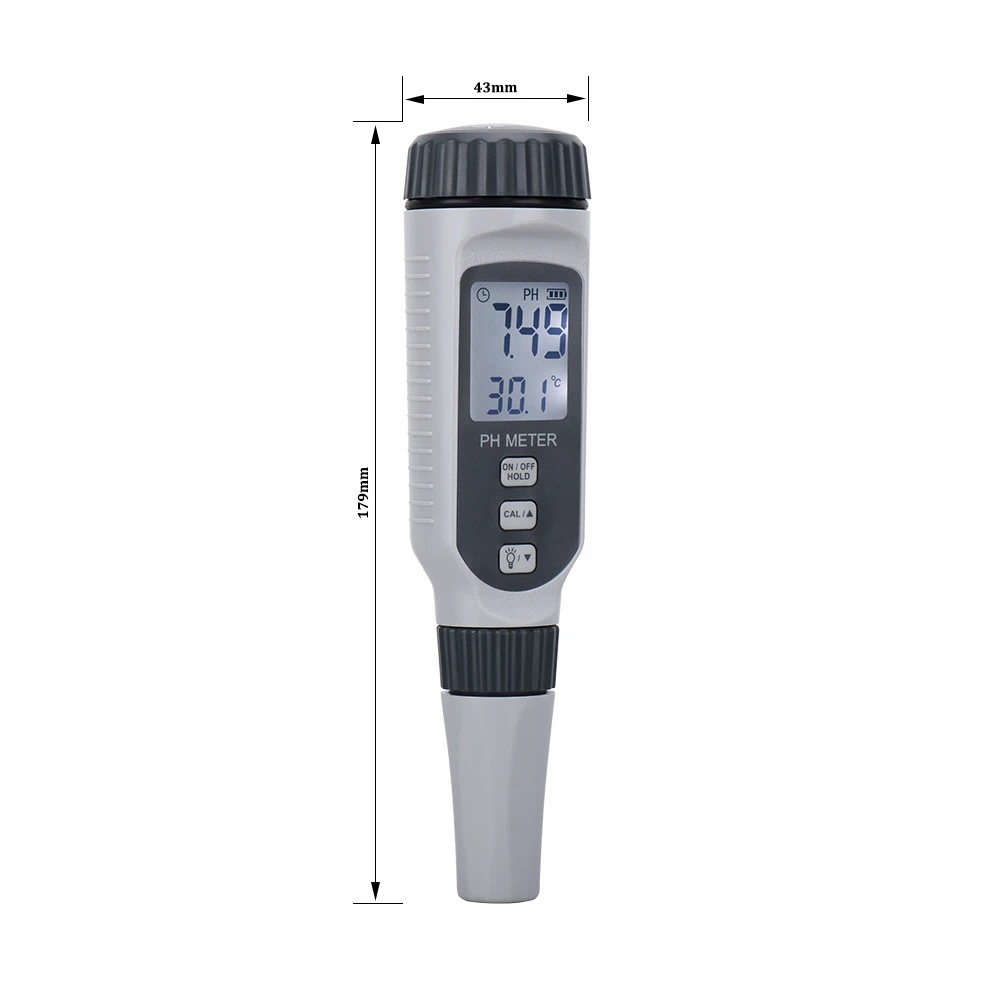
What causes the pH meter electrode to be susceptible to damage?
Such a problem has been experienced by several clients. After a brief period of use, the pH meter will become damaged. The use time is not as long as what the manufacturer said. Is it the electrode that the manufacturer produced? there is a problem? This scenario can also happen if you try an electrode from a different manufacturer. What is happening? You will discover after thorough investigation that the electrode has been tainted by the medium you are monitoring.
The flow reference pH meter electrodes that are currently being produced and sold are electrodes. The micro-osmotic pressure of the electrolyte in the electrode, which allows the electrolyte to permeate the measurement solution, is necessary for the creation of electrical channels. When the medium has a high pressure or concentration, the fluid replacement route is not smooth, there are air bubbles, etc., this may prevent the electrolyte from leaking and raise the electrical path's intermediate impedance. If the medium flows backwards into the pH meter's electrode, it will contaminate the salt bridge or potentially induce a chemical reaction with the internal electrode or electrolyte (such as AgCl sulfide and Ag2S) to poison the electrode.
The loss of alkaline materials (mostly monovalent cations) in a sensitive glass membrane in a strongly oxidizing media can harm the hydration layer and poison the electrode of the pH meter. You can choose a pH meter electrode that can withstand acid. The glass membrane's resistance to acidosis has been improved by the unique process measures (specially added ion formula) used in the manufacturing process. The Linearity is rectified at the same time that the electrode's zero potential corresponds to pH0=2.
Outside of pH2pH9, the pH meter electrode does not have a good linear relationship, and it is simple for a significant number of hydronium ions—H3O—to develop in a very acidic solution. As a result, the number of H on the pH meter electrode's surface falls substantially and the pH value rises. The exchange mechanism between the hydrogen in the solution and the hydrogen on the electrode hydration layer will also involve Na in the strongly alkaline medium, increasing the electrode potential of the pH meter and lowering the pH level.