basic skills:
The measurement of current, voltage and resistance is generally regarded as the basic function of a multimeter. The brand of the early multimeter manufacturer AVO is the abbreviation of the names of the three units of measurement that the device can measure: A Ampere, V Volt, Ω Ohm (Ohm), so the early electricians, generally called The multimeter is a three-meter.
New devices are developed that can measure many more metrics; some common additions, and the units of measure they measure include:
1.H Inductance (Henry)
2.F capacitor (farads)
3. Conductance (Simon) ---- has rarely been used
4. ℃/℉ Temperature (Celsius or Fahrenheit)
5.Hz Frequency (Hertz)
6.% duty cycle (percentage)
7. DWELL closed angle (car digital multimeter)
8. TACH speed (RPM, car digital multimeter)
9.hFE (transistor magnification)
10. Functional auxiliary symbols or signs:
11. AC or ~ , AC
12.DC or = , DC
13. Commonly used forms such as: DCV (direct current voltage), A~ (alternating current)
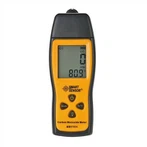
Digital multimeter, a multi-purpose electronic measuring instrument, generally includes functions such as ammeter, voltmeter, ohmmeter, etc., sometimes also called multimeter, multimeter, multimeter, or triple meter.
Digital multimeters are available as portable units for basic fault diagnosis, as well as those placed on a workbench, and some have a resolution of seven or eight digits.
A digital multimeter (DMM) is an electronic instrument used in electrical measurements. It can have many special functions, but the main function is to measure voltage, resistance and current. Digital multimeter, as a modern multi-purpose electronic measuring instrument, is mainly used in physical, electrical, electronic and other measurement fields.
【Resolution】
Resolution refers to how well a meter measures. Knowing the resolution of a meter lets you know if you can see small changes in the signal being measured. For example, if the DMM has a resolution of 1mV over a 4V range, you can see a tiny change of 1mV (1/1000 of a volt) when measuring a 1V signal.
If you're measuring less than 1/4 inch (or 1mm) in length, you're definitely not going to use a ruler with the smallest units in inches (or centimeters). If the temperature is 98.6°F, it's useless to measure with a thermometer that only has integer marks. You need a thermometer with a resolution of 0.1°F.
The number of digits and words are used to describe the resolution of the table. Multimeters are categorized by the number of digits and words they can display.
A 3-and-a-half-digit meter can display three full-digit digits from 0 to 9, and one half-digit (only 1 or no display). A 3½-digit digital meter can achieve a resolution of 1999 words. A 4½-digit digital meter can achieve a resolution of 19999 words.
The resolution of digital tables is better in words than in bits, and the resolution of 3½-digit tables has been increased to 3200 or 4000 words.
The 3200-word digital meter provides better resolution for some measurements. For example, a 1999 word meter, when measuring voltages greater than 200V, you can't display 0.1V. The 3200-character digital meter can still display 0.1V when measuring the voltage of 320V. When the measured voltage is higher than 320V and the resolution of 0.1V is to be achieved, an expensive 20,000-character digital meter should be used.
【Accuracy】
Accuracy refers to the maximum allowable error in a specific use environment. In other words, precision is used to indicate
How close the DMM's measurement is to the actual value of the signal being measured.
For DMMs, accuracy is usually expressed as a percentage of reading. For example, the meaning of 1% reading accuracy is: when the display of the digital multimeter is 100.0V, the actual voltage may be between 99.0V and 101.0V.
Specific values may be added to the basic accuracy in the detailed description. Its meaning is the number of words to be added to transform the rightmost end of the display. In the previous example, the accuracy might be marked as ±(1%+2). Therefore, if the GMM reads 100.0V, the actual voltage will be between 98.8V and 101.2V.
The accuracy of an analog meter is calculated as the full scale error, not the displayed reading. The typical accuracy of an analog meter is ±2% or ±3% of full scale. The typical basic accuracy of a DMM is between ±(0.7%+1) and ±(0.1%+1) of reading, or even higher.