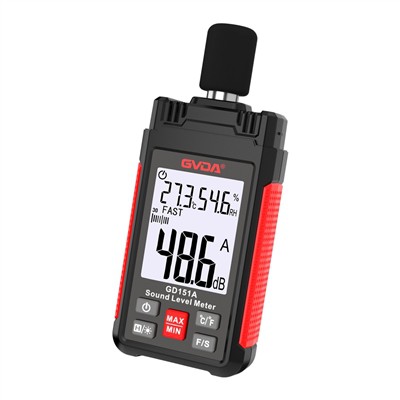
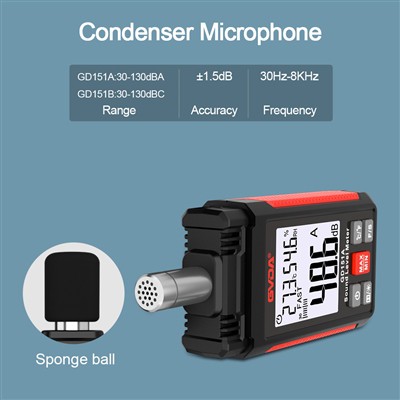
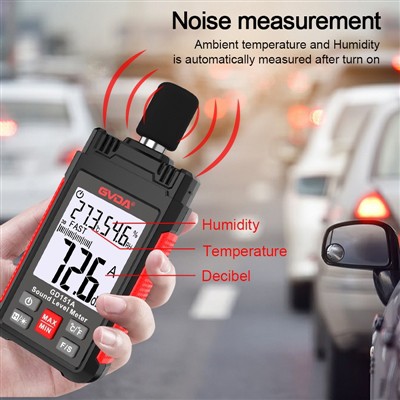
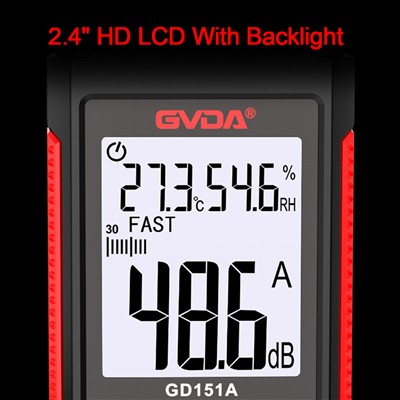
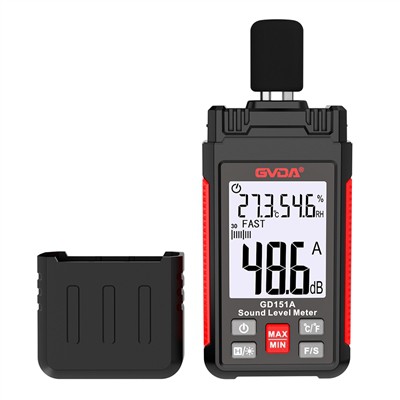
What does frequency weighting of a sound level meter mean?
It refers to the ratio of useful signal power to useless noise power. Usually, power is measured as a function of current and voltage, so the signal-to-noise ratio can also be calculated using voltage values, that is, the ratio of signal level to noise level, but the calculation formula is slightly different. Calculating signal-to-noise ratio based on power output ratio: S/N=10 log. Calculating signal-to-noise ratio based on voltage: S/N=10 log. Due to the logarithmic relationship between signal-to-noise ratio and power or voltage, to improve the signal-to-noise ratio, it is necessary to significantly increase the ratio of output value to noise value. For example, when the signal-to-noise ratio is 100dB, the output voltage is 10000 times the noise voltage. In electronic circuits, this is not an easy task. Humidity sensor probe, stainless steel electric heating tube PT100 sensor, cast aluminum heater, heating coil fluid solenoid valve
If an amplifier has a high signal-to-noise ratio, it means that the background is quiet. Due to the low noise level, many weak details hidden by the noise will appear, increasing the floating sound, enhancing the air feel, and increasing the dynamic range. There is no strict data to determine whether the signal-to-noise ratio of an amplifier is good or bad. Generally speaking, it is better to have a signal-to-noise ratio of about 85dB or above. If it is lower than this value, it is possible to hear obvious noise in music gaps under certain high volume listening conditions. In addition to signal-to-noise ratio, the concept of noise level can also be used to measure the noise level of an amplifier. This is actually a signal-to-noise ratio value calculated using voltage, but the denominator is a fixed number: 0.775V, and the numerator is the noise voltage. Therefore, the noise level and signal-to-noise ratio are: the former is a and the latter is a relative number.
After the specification sheet data in many product manuals, there is often an A word, meaning A-weight, which refers to the weighting of a certain value according to certain rules. As the human ear is particularly sensitive to intermediate frequencies, if the signal-to-noise ratio of an amplifier in the intermediate frequency range is large enough, even if the signal-to-noise ratio is slightly lower in the low and high frequency ranges, it is not easy for the human ear to detect. It can be seen that if the weighting method is used to measure the signal-to-noise ratio, its value will definitely be higher than if the weighting method is not used. In terms of A weighting, its value will be higher than without weighting.