Usage of Sound Level Meters and Factors Affecting Measurement Results
1, Factors affecting the selection of noise meters
Noise meters are mainly used to measure noise, and there are several classifications for noise measurement:
From the perspective of measuring objects, it can be divided into the measurement of environmental noise (sound field) characteristics and the measurement of sound source characteristics.
2. Based on the temporal characteristics of the sound source or field, it can be divided into steady-state noise measurement and non-stationary noise measurement. Unsteady noise can be divided into periodic variation noise, irregular variation noise, and pulse sound.
3. From the frequency characteristics of the sound source or field, it can be divided into broadband noise, narrowband noise, and noise containing prominent pure tone components.
From the perspective of measurement accuracy requirements, it can be divided into precision measurement, engineering measurement, and noise survey.
2, General usage method of noise meter
The correct use of a noise meter directly affects the accuracy of measurement results. Therefore, it is necessary to introduce the use of a noise meter.
1. Precautions
a, Before use, read the instruction manual to understand the usage and precautions of the instrument.
b, Pay attention to the polarity when installing batteries or external power sources, and do not reverse the connection. If not in use for a long time, the battery should be removed to prevent leakage and damage to the instrument.
c, Do not disassemble the microphone to prevent it from being thrown or dropped, and place it properly when not in use.
d, The instrument should be avoided from being placed in places with high temperature, humidity, sewage, dust, and air or chemical gases containing high levels of hydrochloric acid and alkali.
e, Do not disassemble the instrument without authorization. If the instrument is not functioning properly, it can be sent to a repair unit or factory for maintenance.
2. Sensitivity calibration should be performed before and after use to ensure measurement accuracy. Connect the sound level calibrator to the microphone, turn on the calibration power, read the value, adjust the sensitivity potentiometer of the noise meter, and complete the calibration.
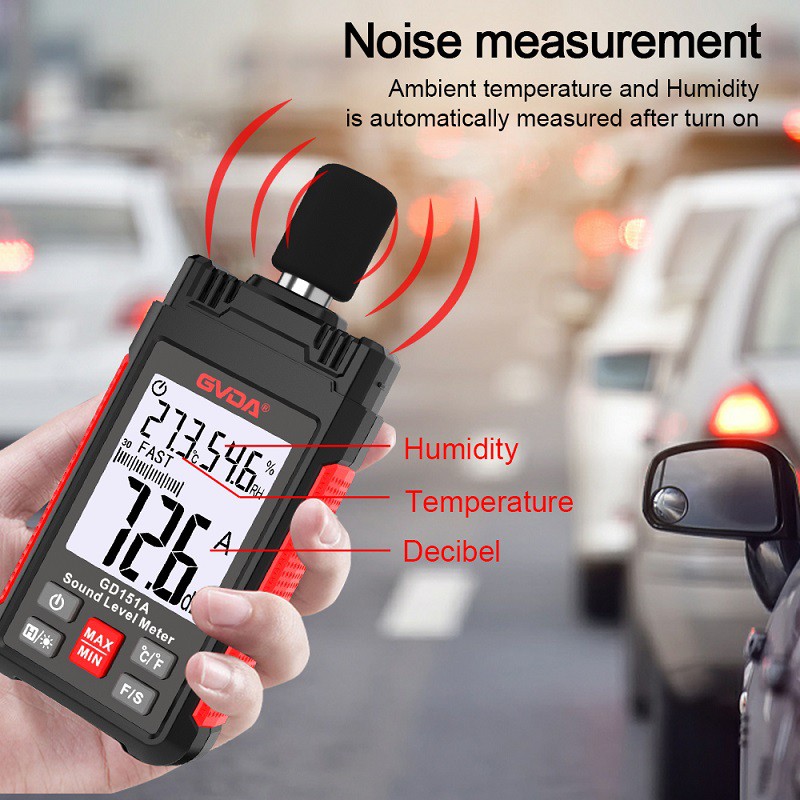
3. Measurement method: When measuring, the instrument should be selected in the correct gear according to the situation. Hold both sides of the noise meter horizontally with both hands, and point the microphone towards the measured sound source. Extension cables and extension rods can also be used to reduce the influence of the appearance of the noise meter and human body on the measurement. The position of the microphone should be determined according to relevant regulations.